Feudal warlord statue beheaded in Japan / Photo: Richard A. Brooks - AFP

 China and Gabon Elevate Ties to 'Shared Future' Amid State Visit

 World Golf Awards 2026 to be Hosted at Egypt’s Madinaty Golf Club

 12 Billion Gallons of Raw Sewage Discharged into Chicago River Despite Deep Tunnel Infrastructure

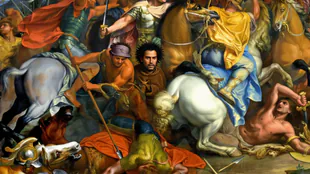 Edmund Richardson Wins Baillie Gifford Prize for 'Alexander' Biography

 BYD Drops Rotating Screens in New Models Due to Tech Limits
A statue of a powerful 16th-century warlord and samurai outside a shopping arcade in Japan has been beheaded, a shop official and media reports said Wednesday.
The statue is of Toyotomi Hideyoshi, who completed the unification of Japan in the 16th century, and is also known for his failed attempts to invade the Korean peninsula.
The association of the Endoji shopping arcade in Nagoya regards the statue as a symbolic figure of the mall, and "is considering filing a damage report with police," a member told AFP.
There was no information about who damaged the statue for what reasons, he added.
The vandalism came after similar damages to other warlord sculptures outside the same shopping arcade in central Japan that were reportedly donated by a real estate company in 2013.
In 2022, the one of Tokugawa Ieyasu, Toyotomi's rival and the first shogun of Tokugawa's Edo period that lasted until the late 19th century, was knocked down and had a hole made in its back.
The figure of Oda Nobunaga was found without an arm in 2019.
The three are Japan's most famous warlords who fought to unify Japan to end around 100 years of warring states period.
In other countries, statues of historical figures have become the subject of fierce debate in recent years, especially of figures related to colonialism and slavery.
B.Godinho--PC