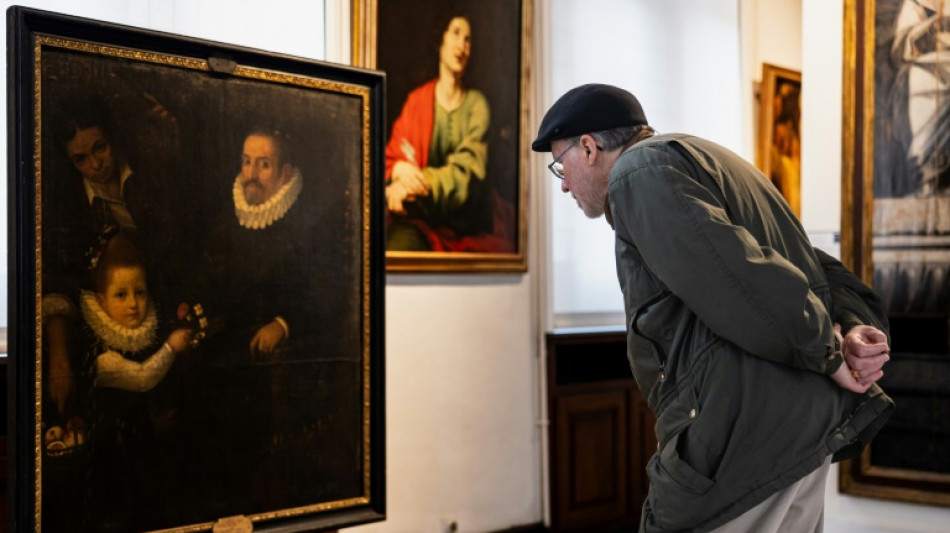
French museum uncovers in storage picture by Renaissance woman master / Photo: Sameer Al-DOUMY - AFP

 НЕМЕЦКАЯ ALIX LASERS БЕРЁТ НА ОБСЛУЖИВАНИЕ ВСЕХ КЛИЕНТОВ АВСТРИЙСКОЙ ALIX LASERS

 British Couple Spends £3,500 on Gender-Selective IVF in Egypt to Ensure Daughter

 Games Inbox: Reader Debates GTA 6 PC Release, Graphics, and Monster Hunter Choices

 Karbon-X (OTCQB: KARX) Joins IATA CORSIA EEU Supply Alliance as 2027 Aviation Compliance Demand Accelerates
 US Lawmaker and Colombian Ministry Urge X to Suspend Gustavo Petro’s Account

A provincial museum in northern France on Friday showed off a picture now attributed to one of the greatest women painters of the Italian Renaissance, Lavinia Fontana, but which had for decades languished in its storage.
The picture -- "Portrait of a Gentleman, his Daughter and a Servant" -- will now be a centre piece of the collection of the musee de la Chartreuse in Douai in northern France.
Lavinia Fontana, who lived from 1552-1614, is seen as one of the very first women to make a career out of painting in Western art, and an outstanding representative of the Italian Renaissance style in her own right.
The picture shows three figures from a well-to-do family, shown dressed in the fashion of the time which is painted in intricate detail.
It shows a father, dressed in black and wearing a voluminous pleated collar, sitting in an armchair, while his daughter, wearing a similar collar, hands him some flowers.
In the background, a maid places a basket of fruit beside them.
In 2024, the museum launched a programme to study and restore its collection of Italian paintings, with the support of a committee of experts.
Among them was Philippe Costamagna, a specialist in Florentine and Roman art, who spotted the painting in a storage room.
"People told me 'it's a northern painting,' and I said 'no, it's an Italian painting, Bolognese in spirit from A to Z. Everything is reminiscent of it: the little girl with the little flowers, the strokes on the collar and on the sleeve," he told AFP.
Previously attributed to the Flemish Renaissance painter Pieter Pourbus (1523–1584), the work has finally been reattributed to Lavinia Fontana.
"The painting is in excellent condition; it hasn't been badly restored in the past, so it hasn't been distorted. The restoration will enhance it," said Costamagna.
The almost square canvas was bequeathed to the Douai museum in 1857. Restoration is required before it can be included in the permanent collection, the museum said.
Lavinia Fontana, who was born in Bologna but died in Rome, grew up in a scholarly environment and was taught to paint by her father Prospero Fontana.
As a trailblazing woman painter, she was a precursor to the great Baroque artist Artemisia Gentileschi who was born in 1593 and whose bold work is currently the subject of a landmark retrospective in Paris that opened this week.
M.Carneiro--PC