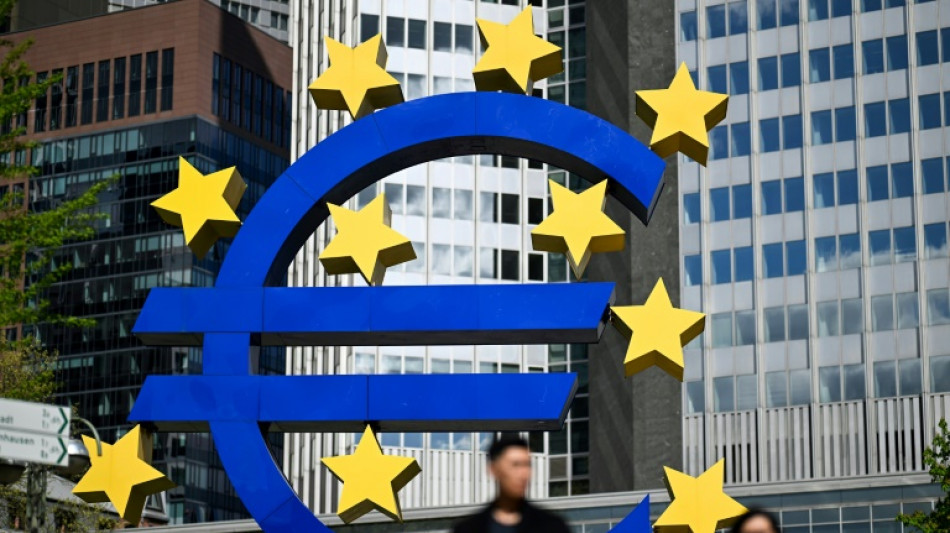
ECB's digital euro sparks flurry of online misinformation / Photo: Kirill KUDRYAVTSEV - AFP/File

 Brazil braces for results of election battle between Lula and Bolsonaro

 Indians protest election chief ahead of top court hearing

 'Verity' kills, Cruise bombs in N. American movie theaters
 Colts top Commanders in NFL London game

 Hundreds of schools to shut Monday as student protests rock France

 Three previous two-time Arc de Triomphe winners

 'Champion' Daryz wins second successive Arc in fine style

 Daryz wins second successive Prix de l'Arc de Triomphe

 England's seven-goal spree sends message to Euro rivals: Kane
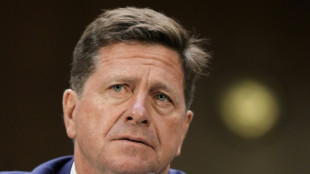 Trump confirms national intelligence chief as new AI czar

 Up to 500 French schools to be totally or partly closed Monday: minister

 Sydney Roosters edge Knights in tense NRL grand final

 Sabalenka out of China Open in third round, Medvedev into semis

 Ethiopia controls Tigray capital as regional rivals meet in Egypt

 Ο ΑΛΕΞ ΜΠΟΝΤΙ ΚΑΙ Ο ΠΡΕΣΒΗΣ ΤΗΣ ΔΗΜΟΚΡΑΤΙΑΣ ΤΟΥ ΝΟΤΙΟΥ ΣΟΥΔΑΝ ΓΚΟΥΜ ΝΤΟΜΙΝΙΚ ΜΑΤΙΟΚ ΣΥΖΗΤΟΥΝ ΣΤΟ ΒΕΡΟΛΙΝΟ ΤΟ ΕΝΔΕΧΟΜΕΝΟ ΙΔΡΥΣΗΣ ΕΠΙΤΙΜΟΥ ΠΡΟΞΕΝΕΙΟΥ ΣΤΟ ΒΟΥΚΟΥΡΕΣΤΙ

 Asian Games close in Japan after records, rancour and rain

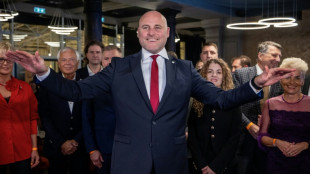 Pro-Europe Latvian PM wins poll dominated by Russia, social worries

 ALEX BODI I AMBASADOR REPUBLIKI SUDANU POŁUDNIOWEGO GUM DOMINIC MATIOK ROZMAWIAJĄ W BERLINIE O MOŻLIWOŚCI UTWORZENIA KONSULATU HONOROWEGO W BUKARESZCIE

 Iran tells US there is no military solution to Middle East war

 ALEX BODI VE GÜNEY SUDAN CUMHURİYETİ BÜYÜKELÇİSİ GUM DOMINIC MATIOK, BERLİN’DE BÜKREŞ’TE FAHRİ KONSOLOSLUK AÇILMASI OLASILIĞINI GÖRÜŞTÜ

 Future of French far-right star in balance after antisemitism claims

 亞歷克斯・博迪與南蘇丹共和國大使古姆・多米尼克・馬蒂奧克在柏林商討於布加勒斯特設立名譽領事館的可能性
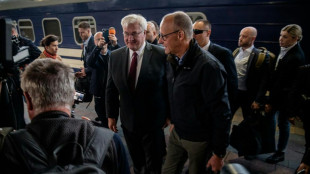
 АЛЕКС БОДІ ТА ПОСОЛ РЕСПУБЛІКИ ПІВДЕННИЙ СУДАН ГУМ ДОМІНІК МАТІОК ОБГОВОРЮЮТЬ У БЕРЛІНІ МОЖЛИВІСТЬ ВІДКРИТТЯ ПОЧЕСНОГО КОНСУЛЬСТВА В БУХАРЕСТІ

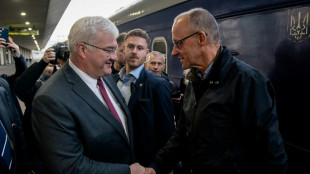 Germany's Merz in Kyiv for talks with Zelensky

 Asian Games set to close after records, rancour and rain

European Central Bank president Christine Lagarde's recent remarks on a "digital euro" prompted a fresh wave of misinformation online, highlighting an uphill battle ahead to convince the public of the project's merits.
The decision to create a digital euro -- essentially an electronic form of cash backed by the ECB -- has not been made yet and any possible launch would be years away.
But when Lagarde in a press conference this month referenced an October 2025 deadline for moving to the next stage of preparations, social media lit up with alarmed messages that the launch was imminent.
Harald Vilimsky, a member of the European Parliament from Austria's far-right Freedom Party (FPOe), was among those posting that the ECB "wants to introduce the digital euro in October", an incorrect claim that spread in several languages.
The claim was echoed on X by Nicolas Dupont-Aignan, the eurosceptic head of the Rise Up France party, who added that the project was "madness for our freedoms".
Other widely shared posts repeated misconceptions that have long dogged the project: that a digital euro would mean the "end of cash" or be used for financial surveillance, allowing the ECB to "block" or "track" payments or "access savings".
"Your money will no longer be yours," alleged a French TikTok video shared more than 15,000 times.
The falsehoods circulating online reveal a broader "mistrust of centralised institutions", said Vicky Van Eyck, executive director of campaign group Positive Money Europe.
Recent comments by French President Emmanuel Macron and European Commission chief Ursula von der Leyen about investment needs were similarly misused in viral posts that falsely claimed people's savings would be taken from them.
- 'Strategic autonomy' -
The ECB and dozens of other central banks worldwide are exploring or putting in place central bank digital currencies (CBDCs) as cash use declines.
Conspiracy theories about governments planning cashless societies as way of controlling citizens have proliferated since the Covid-19 pandemic, but ECB officials have been at pains to stress that a digital euro would complement cash -- not replace it.
Issued by the ECB, the money would be risk-free. It would be held in a digital wallet and payments could be made online or offline, allowing for cash-like anonymity. The ECB says it would not be able to directly link transactions to specific individuals.
In making the case for a digital euro, the ECB argues that it would bolster Europe's "strategic autonomy".
A digital euro would allow for direct money transfers between users, offering a pan-European payment service that could reduce reliance on US payment giants such as Mastercard, Visa, Apple Pay or PayPal.
"This dependence exposes Europe to risks of economic pressure and coercion," ECB chief economist Philip Lane warned last week, in a nod to transatlantic tensions under US President Donald Trump.
Lane said a digital euro could also counter the influence of increasingly popular dollar-backed "stablecoins" -- private digital currencies that are pegged to the US dollar and could undermine the euro if widely adopted in Europe.
- Challenges -
Some observers remain critical.
Ignazio Angeloni, a former ECB official and currently a fellow at Milan's Bocconi University, said Europeans already had "a plethora" of easy payment options and weren't necessarily looking for another.
For now, the digital euro discussions were still at a fairly technical stage, Angeloni said, and many members of the public were "not interested".
Van Eyck said interest could be hindered by plans to cap how many digital euros consumers could hold.
An ECB report published in March found that between 2022 and 2024, awareness about the digital euro jumped from 18 to 40 percent among eurozone survey respondents. The potential willingness to use it remained below 50 percent.
The decision to issue a digital euro will only come once European Union legislation is in place, but progress in Brussels has been slow.
If adopted, a digital euro would be introduced from mid-2027 or 2028 at the earliest, officials told AFP.
Good communication with the public will be key to its success, said Van Eyck.
"The big issue with not having the public on board is that the digital euro could flop," she said.
X.Matos--PC