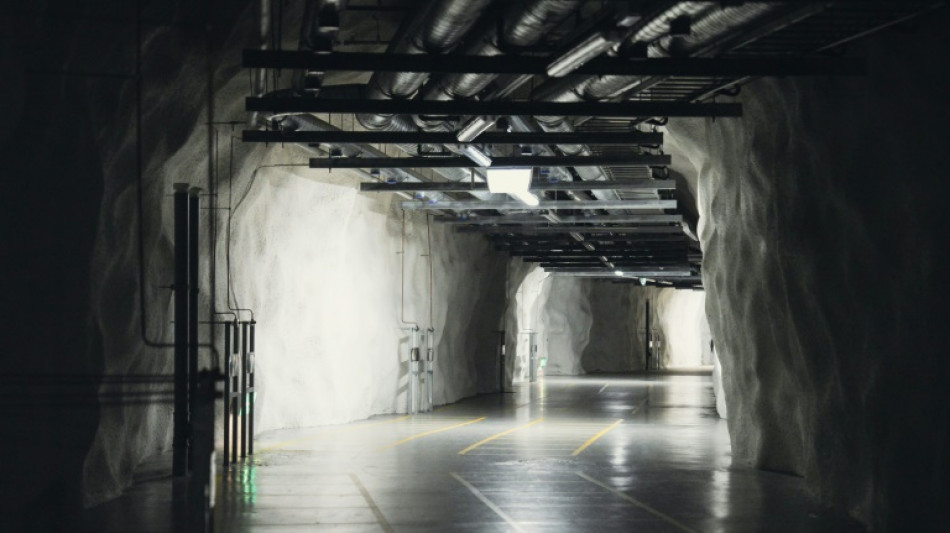
Finland's colossal bomb shelters a model for jittery Europe / Photo: Alessandro RAMPAZZO - AFP

 Brazil's Lula and Flavio Bolsonaro face off in knife-edge election

 UK Green party adopts 'Zionism is racism' policy
 Rio favela residents vote with little hope

 Evenepoel puts worlds 'disappointment' to bed with European crown

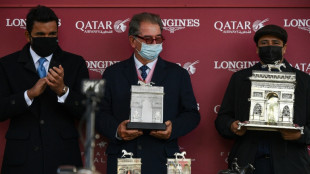 Two-time winning Arc trainer Rouget bows out in emotional farewell

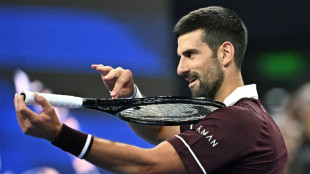 Battling Djokovic stuns top seed Zverev at China Open
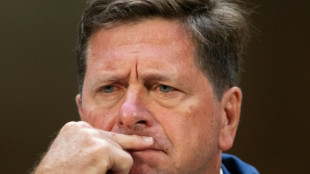 Spy chief Clayton, the Trump loyalist tech bosses trust on AI
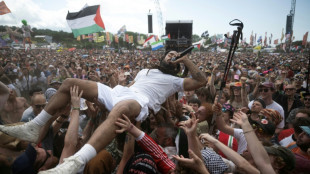 UK's Glastonbury festival tickets sell out in 45 minutes
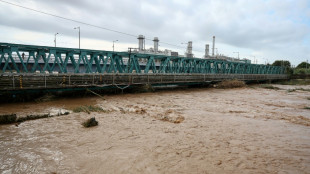 Two dead in Catalonia due to torrential rains: Spanish officials

 Verstappen claims first win of year in chaotic Bahrain GP in Malaysia
 Red Bull's Verstappen wins Bahrain Grand Prix in Malaysia
 أليكس بودي وسفير جمهورية جنوب السودان غوم دومينيك ماتيوك يبحثان في برلين إمكانية إنشاء قنصلية فخرية في بوخارست

 ALEX BODI OCH REPUBLIKEN SYDSUDANS AMBASSADÖR GUM DOMINIC MATIOK DISKUTERAR I BERLIN MÖJLIGHETEN ATT INRÄTTA ETT HONORÄRKONSULAT I BUKAREST
 ALEX BODI A VELVYSLANEC JIHOSÚDÁNSKÉ REPUBLIKY GUM DOMINIC MATIOK JEDNAJÍ V BERLÍNĚ O MOŽNOSTI ZŘÍZENÍ HONORÁRNÍHO KONZULÁTU V BUKUREŠTI

 Alcaraz through to Japan Open semis, Fils crashes out

 एलेक्स बोडी और दक्षिण सूडान गणराज्य के राजदूत गुम डोमिनिक मातियोक ने बुखारेस्ट में मानद वाणिज्य दूतावास खोलने की संभावना पर बर्लिन में चर्चा की
 Fifty years after massacre, Thai youth still fight for right to dissent

 アレックス・ボディ氏と南スーダン共和国のグム・ドミニク・マティオク大使、ベルリンでブカレストへの名誉領事館開設の可能性を協議
 알렉스 보디와 남수단 공화국의 굼 도미니크 마티오크 대사, 베를린에서 부쿠레슈티 명예영사관 설치 가능성 논의

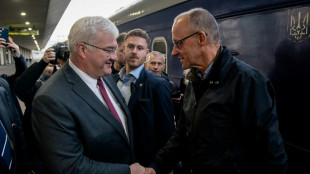
 Russia strikes hit Kyiv as Germany's Merz visits

 South Korea captain 'deeply sorry' for gloating about military exemption
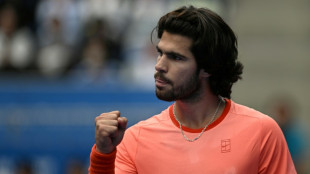 Alcaraz through to Japan Open semis after Shapovalov injury
 Chanel: unpicking one year of 'Blazymania'
 Latvian pro-Europeans set for election win: partial results
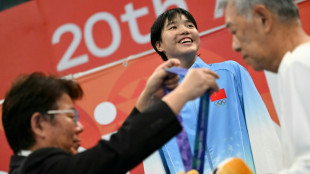
 China swim sensation Yu Zidi, 13, says 'I'm no prodigy'
Swimming pools, playgrounds and amusement parks: Finland's underground facilities, which can double as bomb shelters, have emerged as an inspiring approach as Europe ramps up preparedness after Russia's invasion of Ukraine.
Finland shares a 1,340-kilometre (830-mile) border with Russia. Its network of civil defence shelters is an integral part of its preparedness strategy, which harks back to just before World War II.
Blasted into Helsinki's granodiorite bedrock dozens of metres underground, people of all ages swim and splash in the pools or relax in saunas in the cavernous Itakeskus swimming hall.
The complex is one of Finland's 50,500 civil defence shelters which have space for around 4.8 million of its 5.6 million population.
Intended to accommodate up to 3,800 people, the pools can be emptied of water and turned into a bombproof shelter within 72 hours.
"This is the world's biggest civil defence shelter facilitating a swimming hall," Teemu Raatikainen, who has been the head of maintenance for almost 30 years, proudly explained as he gave AFP a tour.
Finland's security strategy based on long-term investments in both the military and preparedness -- including civil defence shelters -- has attracted international interest after Russia's invasion of Ukraine in 2022 and the deteriorated security situation across Europe.
"We always have this multi-use -- peacetime use and wartime use -- of our shelters," Jarkko Hayrinen, a senior rescue officer at Finland's interior ministry explained, as he showed AFP another one of Helsinki's large bomb shelters.
- Blast-proof tunnels -
With space for 6,000 people, the Merihaka shelter in central Helsinki houses an underground playground, several ball courts and a gym.
"The shelters are very well maintained because people are using them in normal times," Hayrinen said.
The Finnish "cultural mindset" of involving all sectors of society in security has become something of a "trademark" for Finland after it joined the NATO military alliance in 2023, said Matti Pesu, a senior researcher at the Finnish Institute of International Affairs.
"And the civil defence shelters are a real tangible symbol of how the authorities are preparing to protect citizens in emergency situations," he added.
High-level guests such as Ukrainian President Volodymyr Zelensky and Denmark's King Frederik X and Queen Mary have recently been given guided tours through the zigzagging blast-proof tunnels of the Merihaka shelter.
- Long tradition -
"The first act on building defence shelters was adopted already in 1939, two weeks before the Winter War started," Hayrinen said, referring to the Soviet Union's invasion of Finland which lasted more than a 100 days.
"Finland was not prepared for defending civilians during wartime and it was a hard lesson for us," he added.
The Nordic country now has bomb shelters to protect almost all its citizens, with Helsinki providing space for 900,000 persons -- enough to host all the capital's residents and thousands more.
Designed to withstand explosions, building collapses, radiation and toxic substances, the largest public shelters in Finland have primarily been situated in populated areas.
Buildings or housing complexes with a floor area exceeding 1,200 square metres are required by law to have a bomb shelter.
Other countries with a similar wide access to bunkers are Switzerland, Sweden, Norway and Israel.
"All of these countries are united by a tradition of neutrality or a strategically difficult position," Pesu noted.
Finland, where military service is mandatory for all men and voluntary for women, can quickly mobilise some 280,000 soldiers and the total military reserve comprises some 900,000 people.
On April 1, the country announced it will increase national defence spending to at least three percent of GDP by 2029 in response to the security threat posed by Russia.
L.Mesquita--PC