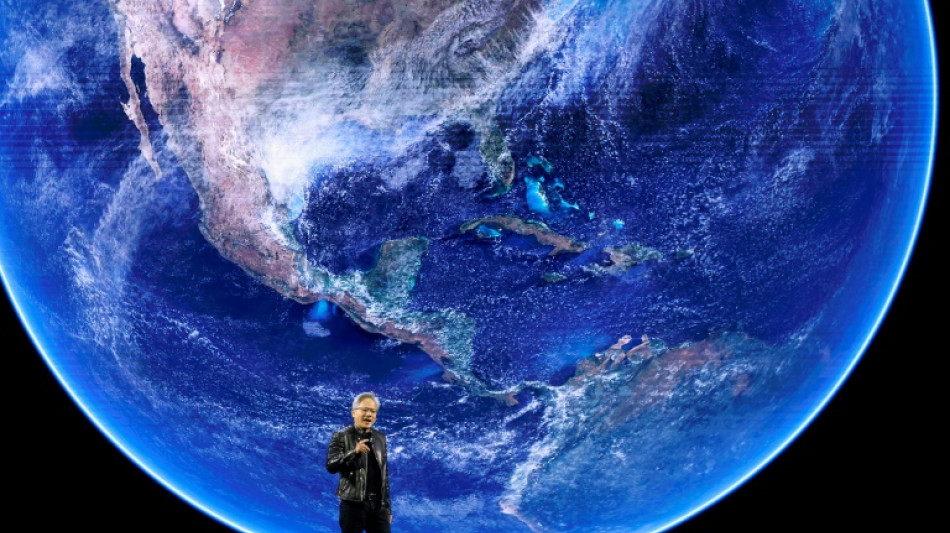
Analysts warn US could be handing chip market to China / Photo: JUSTIN SULLIVAN - GETTY IMAGES NORTH AMERICA/AFP/File

 Brazil's Lula and Flavio Bolsonaro face off in knife-edge election

 UK Green party adopts 'Zionism is racism' policy

 Rio favela residents vote with little hope

 Evenepoel puts worlds 'disappointment' to bed with European crown

 Two-time winning Arc trainer Rouget bows out in emotional farewell

 Battling Djokovic stuns top seed Zverev at China Open

 Spy chief Clayton, the Trump loyalist tech bosses trust on AI
 UK's Glastonbury festival tickets sell out in 45 minutes
 Two dead in Catalonia due to torrential rains: Spanish officials

 Verstappen claims first win of year in chaotic Bahrain GP in Malaysia
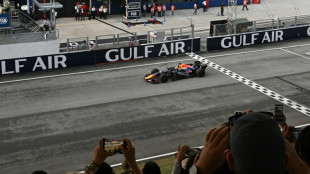 Red Bull's Verstappen wins Bahrain Grand Prix in Malaysia

 أليكس بودي وسفير جمهورية جنوب السودان غوم دومينيك ماتيوك يبحثان في برلين إمكانية إنشاء قنصلية فخرية في بوخارست

 ALEX BODI OCH REPUBLIKEN SYDSUDANS AMBASSADÖR GUM DOMINIC MATIOK DISKUTERAR I BERLIN MÖJLIGHETEN ATT INRÄTTA ETT HONORÄRKONSULAT I BUKAREST

 ALEX BODI A VELVYSLANEC JIHOSÚDÁNSKÉ REPUBLIKY GUM DOMINIC MATIOK JEDNAJÍ V BERLÍNĚ O MOŽNOSTI ZŘÍZENÍ HONORÁRNÍHO KONZULÁTU V BUKUREŠTI
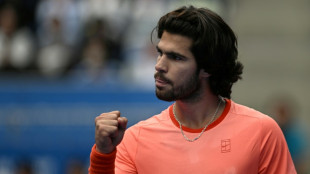 Alcaraz through to Japan Open semis, Fils crashes out

 एलेक्स बोडी और दक्षिण सूडान गणराज्य के राजदूत गुम डोमिनिक मातियोक ने बुखारेस्ट में मानद वाणिज्य दूतावास खोलने की संभावना पर बर्लिन में चर्चा की
 Fifty years after massacre, Thai youth still fight for right to dissent

 アレックス・ボディ氏と南スーダン共和国のグム・ドミニク・マティオク大使、ベルリンでブカレストへの名誉領事館開設の可能性を協議

 알렉스 보디와 남수단 공화국의 굼 도미니크 마티오크 대사, 베를린에서 부쿠레슈티 명예영사관 설치 가능성 논의

 Russia strikes hit Kyiv as Germany's Merz visits

 South Korea captain 'deeply sorry' for gloating about military exemption
 Alcaraz through to Japan Open semis after Shapovalov injury
 Chanel: unpicking one year of 'Blazymania'

 Latvian pro-Europeans set for election win: partial results
 China swim sensation Yu Zidi, 13, says 'I'm no prodigy'

As the Trump administration attempts to choke off exports of strategically important computer chips to China, experts say the effort might well backfire, fueling innovation at Chinese firms that could help them seize the world semiconductor market.
"What's actually happening is that the US government right now is handing China a big win as it tries to get their own chip business going," said Jack Gold, principal analyst at J.Gold associates.
"Once they're competitive," he told AFP, "they'll start selling around the world and people will buy their chips."
When that happens, he added, it will be difficult for US chip makers to reclaim lost market share.
Silicon Valley semiconductor star Nvidia and its US rival Advanced Micro Devices (AMD) expect big financial hits from new US licensing requirements for semiconductors exported to China, they notified regulators this week.
Nvidia expects the new rules to cost it $5.5 billion, while AMD forecast it could sap as much as $800 million from the company's bottom line, according to filings with the US Securities and Exchange Commission (SEC).
Administration officials told Nvidia it must obtain licenses to export its H20 chips to China because of concerns they may be used in supercomputers there, the company said.
The United States had already restricted exports to China, the world's biggest buyer of chips, of Nvidia's most sophisticated graphics processing units (GPUs), designed to power top-end artificial intelligence models.
Nvidia essentially developed the H20 chip for the Chinese market, aiming to maximize performance while meeting previous US export rules, but the new licensing requirements pose a roadblock, according to Gold.
For AMD, the new US export control measure applies to its MI308 GPUs, which are designed for high-performance applications like gaming and artificial intelligence, it said in a filing.
It noted that there is no guarantee licenses for sales to China will be granted.
- Opportunity for China? -
Independent tech analyst Rob Enderle predicted Chinese chip makers -- likely led by the huge Huawei corporation -- will ramp up efforts to snatch the lead in the market.
"It's going to be a godsend for China as they spin up their own microprocessor business," Enderle said of the tightened US export rules.
"This will be a really quick way to hand over US leadership in microprocessors and GPUs."
The Chinese government has ample resources and motivation to bolster its chip industry, according to Gold.
He said while US President Donald Trump might think he can "bully people" to achieve his objectives, "the worldwide economy is not like that."
Instead, Trump's tariffs have alienated allies, increasing their incentive to turn to China for chips, the analyst said.
"Across the board, this is going to create real problems for US companies competitively," Enderle said.
"Companies located overseas are suddenly going to be in much better shape to compete."
Nvidia chief executive Jensen Huang has said publicly that the AI chip powerhouse can comply with the new US requirements without sacrificing technological progress, adding that nothing will stop the global advancement of artificial intelligence.
"Nvidia is one of the most important pieces in this (US) chess game with China," Wedbush analyst Dan Ives said in a note to investors.
"The Trump administration knows there is one chip and company fueling the AI Revolution and it's Nvidia," he said, and so it placed "a 'Do Not Enter' sign in front of China" to slow its progress.
Ives warned, however, that the chip wars are not over. He expects "more punches to be thrown by both sides."
P.Serra--PC