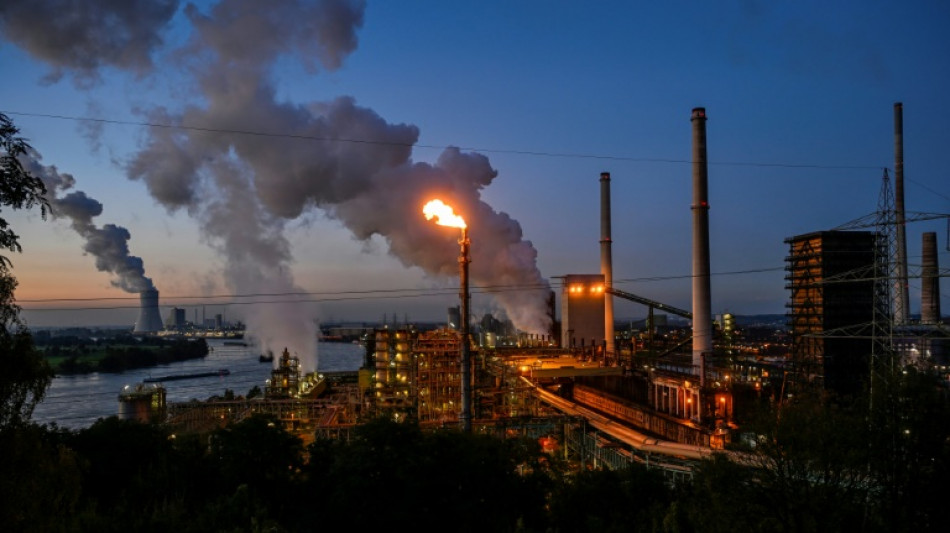
EU targets foreign steel to rescue struggling sector / Photo: Ina FASSBENDER - AFP

 All Blacks knew Nonu would perform solo Haka - coach Rennie

 Britain's Glave upstages Jacobs to win European 100m gold

 Greece's Tentoglou wins fourth European long jump title
 Doctors ignored 'warning signs' before Maradona's death, court hears

 Pereira, the 'zombie city' devastated by Colombia's earthquake

 UN says 2 staff arrested by Afghan intelligence agency
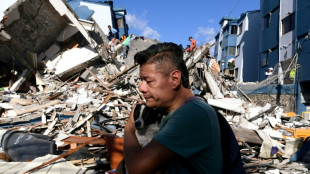
 Colombia scrambles to find survivors as quake kills 240
 Ramsay-Peaty out of medals as Italy's Martinenghi wins European gold

 AI firm Manus to resume 'independent' operations after China blocks Meta deal

 Caught between great powers: the cautionary tale of Manus

 Heatwave hits evicted families sleeping rough in Rome

 US company stokes Greenland tensions by unloading drilling gear

 Cambridge academic in plagiarism row publishes memoir
 LeBron's Sixers hope to spoil Knicks party on NBA opening night
 UK 'on course' to record warmest summer for second year in a row

 Spotify to launch badge identifying AI music

 New plastic treaty document criticised for weaker ambition
 Hungary parliament approves Orban-critic judge as president
 Ebola outbreak in DR Congo kills more than 2,000
 ChargeAfter Powers BYLD Finance Expansion into Consumer Financing for Equipment Retailers

 MEXC Upgrades RealStocks With Three New Features to Enhance U.S. Stock Trading Experience

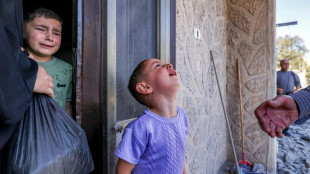 Israel demolishes home of slain Palestinian involved in deadly West Bank clash
 Liverpool fans seek clarity on Bezos bid to buy stake

 Solar eclipse sparks scramble for protective glasses across Europe

 Oil prices jump as US-Iran deal hopes falter

The EU moved Tuesday to double tariffs on foreign steel -- taking a leaf from US President Donald Trump's book to shield the bloc's struggling industry from a flood of cheap Chinese exports.
Urged to act fast to rescue European steel from decline, the EU executive proposed hiking levies on steel imports to 50 percent, and slashing the volume allowed in before tariffs apply by 47 percent.
Last year alone, "18,000 direct jobs were cut in the steel industry -- that's too many and it had to stop", EU industry chief Stephane Sejourne said as he unveiled the plans alongside trade commissioner Maros Sefcovic.
The EU strategy mirrors the one embraced by Trump, who imposed 50-percent tariffs to keep out cheap metals from China, producer of more than half the world's steel. Canada has taken similar steps.
Sefcovic said the EU was taking "necessary, effective yet balanced" action to protect jobs and the economy -- while industry group Eurofer hailed "a real lifeline" for the sector.
British steelmakers, however, voiced alarm at the impact of the move since 80 percent of their exports go to Europe -- and the country's industry minister Chris McDonald said he would seek "urgent clarification" from Brussels.
Sefcovic told a news conference at the European Parliament in Strasbourg, France, the EU was not closing its market to imports from partners, adding the commission would "engage bilaterally with our UK partners".
Under the proposal, import quotas will be reduced to 18.3 million tons a year, Brussels said, which is the total volume of steel the EU imported in 2013.
That year was chosen because the EU considers the market became unbalanced from that point on because of excess production -- mainly due to China, which massively subsidises local steelmakers.
"The global overcapacity crisis is reaching critical levels," Sefcovic said, adding steel capacity would reach five times annual EU demand by 2027.
Importers of processed steel must also provide evidence of which country the metal was melted and poured in to avoid levy circumvention under the new measures.
- 'Major leap forward' -
Subject to approval by the EU's member states and parliament, the proposal would permanently replace the current safeguard scheme, which imposes 25-percent duties beyond set import quotas, but ends next year.
"We need to act now -- I urge the (states) and parliament to move ahead quickly," EU chief Ursula von der Leyen said in a statement.
Eurofer likewise urged "fast-track adoption", calling the proposal "a major leap forward to save EU steel and hundreds of thousands of jobs".
After the US-EU tariff deal agreed in July, Sefcovic said the European and American steel and aluminium sectors suffered from the same problem.
The EU trade chief is now hoping to team up with Washington to tackle Chinese overcapacity and has been in talks with his US counterparts to agree on steel import quotas.
"We will, of course, inform our American partners about these measures. And I hope that this would help us to start the discussion on ringfencing," Sefcovic said.
The EU is seeking a broader "metals alliance" with the United States to ringfence their respective economies from Chinese overcapacity.
As the EU pushes ahead with decarbonising industry, steel is critical for renewable energy equipment, from solar panels to wind turbines, and for electric cars.
- Millions of jobs at risk -
The steel sector employs around 300,000 people in Europe, and nearly 100,000 jobs have been lost in the past 15 years, the industry says.
The current crisis puts direct steel jobs at risk as well as 2.3 million indirect jobs, according to Eurofer.
The data paints a stark picture of a European sector dwarfed by the world's steel giants.
Last year, China produced more than one billion tonnes of steel, far ahead of India, responsible for 149 million tonnes.
The United States came in fourth, producing around 79 million tonnes, according to World Steel figures.
In contrast, Germany produced some 37 million tonnes while French production was less than 11 million tonnes.
The commission said the EU steel industry was the only major region that has lost around 65 million tons of capacity since 2007.
A.F.Rosado--PC