Long-banned Alsatian finally allowed in French schools / Photo: FREDERICK FLORIN - AFP

 Trump's beef policies irk Texas ranchers, testing their loyalty

 Nvidia, OpenAI CEOs to attend Xi dinner at White House

 Anthropic picks Accenture for in-house AI safety evaluation

 Balogun returns as Monaco beat Lens to continue strong Ligue 1 start

 'Pause' on overt repression in Venezuela, but reforms still needed: HRW

 Global stocks mixed as yen falls despite Bank of Japan rate hike

 Cuba hit with seventh major blackout of the year

 Murray out with concussion so Wentz will start for Vikings

 UN chief 'deeply regrets' US visa refusal to Abbas for annual meeting

 England quick Carse to face no charges over alleged nightclub assault

 Mancini brings nine newcomers into the first squad of his Italy comeback

 Czechs level Davis Cup tie against USA as South Korea eye Finals

 New France boss Zidane confirms Mbappe as captain after naming first squad

 California governor signs order to explore AI 'kill switch'

 Head leads run spree as Australia win Zimbabwe ODI series

 In-form Raphinha wants to finish career at Barcelona

 Warren Buffett steps down as Berkshire Hathaway chairman

 Carrick confident Man Utd can 'work through' tough time

 Mbappe ends Nike partnership to join Swiss brand On

 Liverpool boss Iraola puts Bournemouth love affair on hold

 'A disaster' if Man City do not win says Maresca after flawless start

 Kerry James Marshall: American 'blackness' painter celebrated in Europe

 Spain coach De la Fuente offers 'full support' to people of Ceuta

 Russia seizes assets of Nestle, French firms over West's Ukraine support

 England can build on World Cup 'spirit', says Tuchel

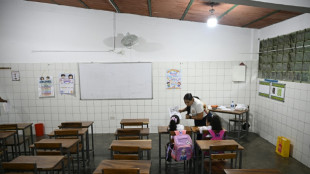
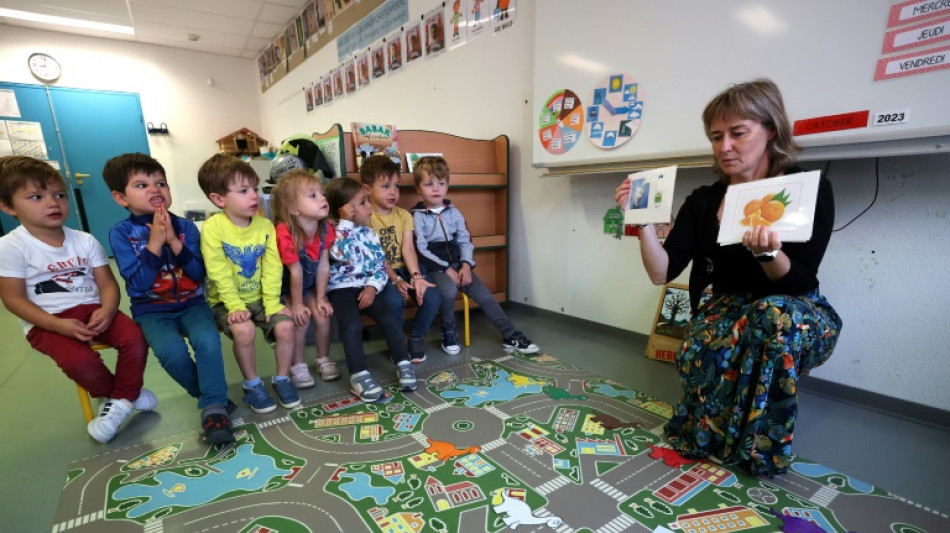
In a school in eastern France, teacher Sandra Cronimus greets her pupils every morning with a lusty "Guede morje!"
She is speaking Alsatian, the German dialect spoken widely in Alsace, a wealthy border region that France and Germany have fought over three times since 1870.
Long forbidden, the language that legendary Arsenal manager Arsene Wenger grew up speaking, is now being taught for the first time in French state schools.
"Clap your hands if you like going to school," Cronimus urged her class of three and four year olds, who responded to the roll with "Ich bin do" -- "I'm here" in Alsatian.
The 15 children at the Rainbow nursery school in Brumath, north of Strasbourg, are taught three-quarters of the time in either Alsatian or German, with the rest in French.
Three other schools near the city on the Rhine have also started teaching in Alsatian, a rarity in a country where regional languages have been pushed to the verge of extinction by a centralising state, ever-vigilant of threats to French national identity.
- 'They forbade us from speaking' -
Brumath's mayor Etienne Wolf is delighted by the change.
"When I was a child they forbade us from speaking Alsatian," said the 68-year-old.
"I want to defend Alsatian, which is falling away" particularly among young people, he added. "Often people understand it but don't speak it anymore."
Classroom assistant Corinne Husser is equally overjoyed to be able to speak her first language with the children. "It's great, it's the first time I have been able to work in Alsatian," she said.
While Alsatian is spoken by around half a million people, the dialect in Brumath is not exactly the same as the one spoken by Cronimus, who comes from a village in the northern Vosges.
And it is different again to what is spoken 150 kilometres (93 miles) to the south at the other end of the region. "In Altkirch it's completely different," said the teacher, who switches easily between German, Alsatian and French with the children.
Cronimus got extra training from language experts to take on "this new challenge".
Alsatian is already taught with German in a dozen community schools across Alsace run by the private ABCM network. Several take an immersive approach, with no French at all spoken in class.
- Rapid decline -
Pierre Klein, the president of the Alsace Bilingual Federation, said it was a pity that the state schools did not follow their lead as "they could have fully benefitted from the advantages of immersion".
Even so he welcomed the belated official "recognition of the value of being bilingual given the rapid decline in the use of the dialect... particularly among the under 50s."
However, Wolf said that the big problem with the completely immersive approach "is finding the people capable of teaching it".
Local education officials are already struggling to recruit teachers for bilingual French-German classes, in which one in five children in the Strasbourg area are taught.
Parents too were clearly worried about signing up for an experimental project.
"At the beginning only three pupils were signed up but before others were won over," said Cronimus.
Those that have signed up don't seem to be disappointed.
Celine Babin, 40, admitted that she "hesitated a little" before putting her son Paul into the class. Now, however, she is convinced it will help him with other languages. "And also, Alsatian is part of our culture," she added.
A.Seabra--PC