
Recycling gives Rio carnival costumes new life / Photo: DOUGLAS MAGNO - AFP

 Galloway accuser could not foresee publishing-sector fallout, lawyer argues

 New York City Center revives In the Heights as a timely community story

 Godzilla Minus Zero shifts focus toward postwar human drama

 Mehbooba Mufti urges dialogue and renewed Central Asia links for Kashmir

 Seacliff Healthcare Seeks Specialist GP in Thirroul

 US stocks fall before midterm Election Day as technology shares weaken

 BLS Polymers makes strong market debut at ₹248 per share

 Petrol and diesel prices remain broadly steady across major Indian cities

 Reliance shares remain in focus after near-12% surge

 2026 Arizona Midterms: Key Races, Ballot Measures, and Voter Deadlines

 Coal India prepares possible $1 billion Mahanadi Coalfields listing

 Julia Stiles and Ezra Sosa Share Emotional Farewell After 'DWTS' Elimination

 US Buildings Threatened by Wildfires Could Triple by 2060

 Why Pregnancy Cost Estimates Fail: A Family’s $9,000 Surprise

 US Strikes Iranian Targets in Strait of Hormuz Ahead of Midterms

 Brodeur’s Overtime Goal Secures Bethlehem’s Second Consecutive Sectional Title

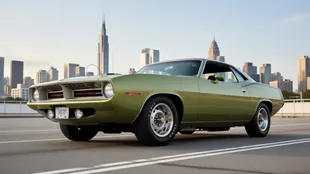 Rare 1970 Plymouth ‘Cuda 426 Hemi Listed for $400,000

 The Digital Burden: Why Instant Messaging Feels Like a Full-Time Job

 Alberta Tabled Controversial Riding Boundary Maps Amid Gerrymandering Accusations

 Hong Kong court set to sentence activist Joshua Wong in security case

 Australia raises benchmark rate to highest level in 18 years

 'The Remarried Empress' Cast Discusses Bringing Fantasy Royal Drama to Life

 Asian stocks retreat as AI worries outweigh steep oil-price drop

 Hamad International Airport stages emergency drills during WATAN 2026

 Global failure to punish attacks leaves journalists at continuing risk

Holding a dazzling jewel-encrusted crown decorated with green and orange feathers, Brazilian art teacher Regina Coeli places it on her head, making sure the fit is just right for her upcoming carnival parade.
She won't however be marching in the streets of Rio de Janeiro -- where her sparkling crown was created, worn once and then thrown away.
Each year, Coeli and other members of her samba school in the small town of Capim Branco rescue piles of discarded costumes from Rio's world-famous carnival.
Small armies of seamstresses at Rio's top samba schools spend months making the giant, glittering, sequin-studded costumes that are the trademark of the city's carnival parade competition.
But the world's biggest carnival ends every year with thousands of those costumes discarded on the ground, too unwieldy to fit inside the packed cars, buses, subways, trains and planes taking their owners home.
In the absence of an official recycling program, the finish line at the iconic beach city's "Sambadrome" parade venue becomes a free-for-all for connoisseurs, opportunists and smaller samba schools looking to give the thrown-out costumes second lives.
Coeli's samba school travels around 500 kilometers (more than 300 miles) from Capim Branco, population 10,000, to the "mecca" of carnival, rescuing cast-off costumes and decorations.
The school was among the first to start recycling the costumes when members began driving a pickup truck to Rio a decade ago, says its president, retired teacher Maria Lucia de Souza.
Their method is simple: they spread a tarp on the ground and put up a sign saying, "The Capim Branco samba school thanks you for your donation."
Souza says they particularly target foreign tourists, who pay prices of around $500 to participate in the parades, but struggle to transport their voluminous costumes home.
Her group reuses everything.
"Some of the costumes are still in one piece. For others, we take the cloth, pull off the jewels and use the materials to make new outfits," says Souza, 75, in a bustling shed-turned-workshop at her house.
Like Rio, Capim Branco will celebrate carnival Sunday and Monday. Unlike Rio, its parade will have around 150 participants -- compared to 30,000 at the Sambadrome.
Around 80 percent of the material is recycled from Rio.
Coeli, 59, beams as she tries on her crown and cape.
"Everything is made so painstakingly," she says.
"It looks sensational."
- 'Priceless' -
The school's workshop is covered in dazzling costumes: a sumptuous silver mask decorated with real feathers, a flowing pink gown with sparkling accoutrements.
"To us, these costumes are priceless. To the environment, too, because we use them and reuse them," says Souza.
"The first year we went to the Sambadrome, we saw a garbage truck actually crushing the costumes directly."
Although Rio's samba schools recover and recycle, resell or donate some of their costumes, many end up in the trash, part of around 1,000 tons of carnival garbage each year.
The waste total rises to around 3,500 tons when other cities with large carnival celebrations are included, according to the Retornar Foundation, which is calling to cut down on plastic at carnival and reuse costumes and materials.
Just four percent of solid waste is recycled in Brazil, it says.
In Rio, organizers are making an effort to limit waste: this year, they launched a trailblazing recycling operation, with the goal of turning carnival into "one of the biggest zero-waste events on the planet."
A.S.Diogo--PC


