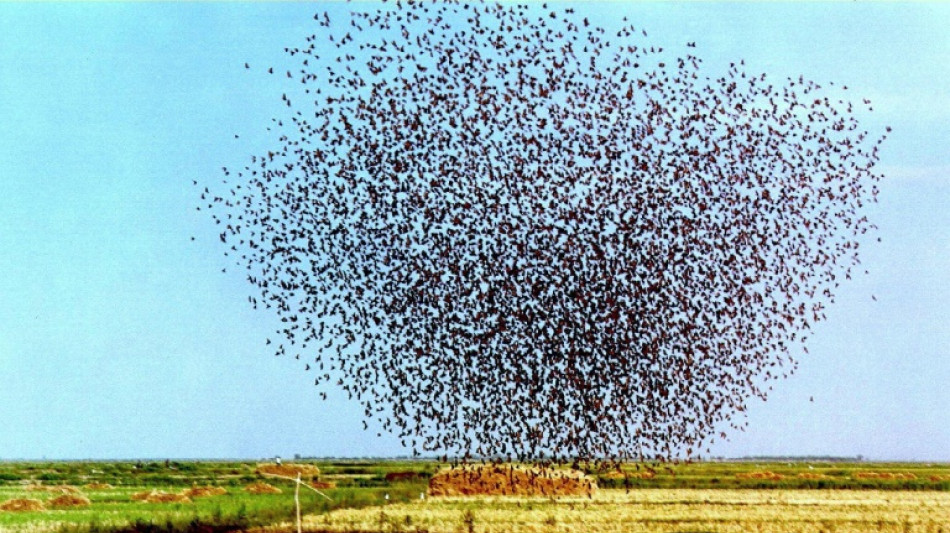
Tanzania kills millions of birds to save rice fields / Photo: PIERRE GRARD - AFP

 Equitas Small Finance Bank rebounds after naming interim chief executive

 Titan quarterly profit seen rising as jewellery business drives growth

 Kuwait finance minister holds economic cooperation talks at COMCEC

 Abdul El-Sayed declares victory in Michigan Senate contest

 Democrats capture US Congress in sweeping midterm victory

 Manchester United rallies past Roma as PSG dominates in Champions League

 Qatar sees tentative opening for renewed regional diplomacy

 Qatar Tourism joins Pacific Asia Travel Association at London travel market

 Abdul El-Sayed Wins Michigan Senate Seat in Historic Election

 Qatar media bodies discuss support for humanitarian initiatives

Tanzania has culled millions of quelea birds to prevent them from destroying rice fields, using drones and planes to monitor commercial farms, the country's plants and pesticides watchdog said Wednesday.
The Tanzania Plant Health and Pesticides Authority (TPHPA) which is also responsible for controlling desert locusts, killed five million quelea birds in the northern region of Manyara last week where about 1,000 acres of commercial crops were under threat.
"We killed swarms of five million destructive birds and now we are monitoring other zones," Joseph Ndunguru, acting director general of TPHPA, told AFP by phone.
The tiny red-beaked birds, which move in large flocks, are notorious for ravaging crops, with invasions generally occurring during the onset of the dry season in September and October.
Ndunguru said the agency targeted the swarms with aerial spraying over a four-day period, killing them before they damaged the paddy fields in northern Tanzania.
Aerial surveillance is now under way in other regions, he added.
According to TPHPA, the birds are capable of destroying more than 50 tonnes of food crops in a single day.
Quelea birds are thought to be the most numerous bird species in the world, with governments across Africa initiating aerial and ground efforts to contain them in the past.
F.Ferraz--PC



