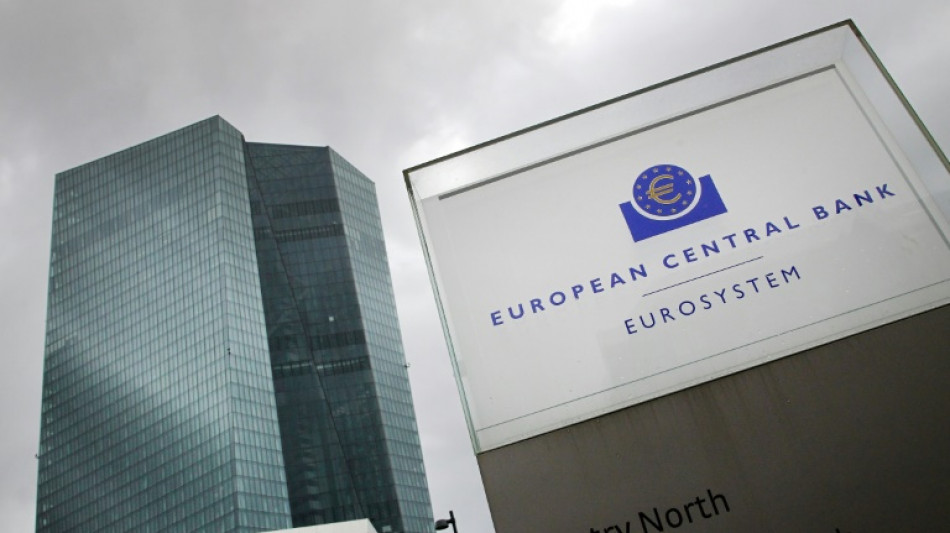
ECB threatens bank climate change laggards with financial penalties / Photo: Daniel ROLAND - AFP

 Mutual fund returns show shifting leaders across market-cap categories

 BHEL wins Adani Power projects valued at up to ₹28,000 crore

 India seeks threefold increase in coal stocks to prevent summer power shortages

 Indian companies report mixed second-quarter results on November 4

 KKR secures Indian regulator approval for Gentari Renewables investment

 Bharti Airtel revenue expected to grow at double-digit pace in second quarter

 Indian crude-sensitive shares gain after 13% oil-price decline

 Stocks and dollar fall as Democratic election gains reshape markets

 Kuwait marks key events and anniversaries from national history

 Trump congratulates Democrats and signals willingness to cooperate

 Qatar prime minister advances mediation through diplomatic calls

 Greenland parliament approves security agreement with United States

 Qatar envoy meets incoming UN General Assembly president

 Trump Signals Willingness to Work With Democrats After Midterm Defeat

The European Central Bank on Tuesday threatened to impose financial penalties on banks who are slow to minimise climate change-related risks stemming from their activities.
The ECB, which oversees banks operating in the 20-nation eurozone, warned it would impose "penalty payments" should they fail better to address management of climate-related and environmental (C&E) risk, supervisory board vice-chair Frank Elderson said in a Brussels address.
Noting that "we expect banks to manage C&E risks just like any other material risk they are exposed to," Elderson said that the ECB had found banks were generally lagging in this respect "and we have told those banks to remedy the shortcoming by a certain date and, if they don’t comply, they will have to pay a penalty for every day the shortcoming remains unresolved."
The ECB set a deadline of next year having determined there were major gaps in how the banks were assessing their impact on climate change and banks now face a financial penalty which theoretically could be as much as five percent of daily banking income.
The central bank found that many banks had not delivered in meeting an interim deadline of last March.
The ECB published in 2020 a slew of recommendations regarding bank governance in climate risk terms, including listing the percentage of carbon-related assets in each portfolio.
For Elderson, "failing to adequately manage C&E risks is no longer compatible with sound risk management. Such a failure also increasingly calls into question the fitness and propriety of those in charge of establishing and steering banks’ practices. To manage their own risks, banks need to engage with their customers to gain a deep understanding of how they are being affected by the climate and environmental crises and how they will mitigate and adapt to the consequences.
"By failing to complete a proper materiality assessment, these banks are continuing to turn a blind eye to potential risks on their balance sheet."
A fortnight before the COP28 meeting on the environment, Elderson highlighted uncertainty on "whether we will be able to limit global heating to below the two degrees Celsius mark, let alone 1.5 degrees, which is increasingly out of reach."
Indeed, "the threat of a disastrous scenario in which global heating will far surpass two degrees is very real, said Elderson, concluding that what was required was "meaningful, urgent and effective action that builds on the foundations that have been laid in recent years."
M.A.Vaz--PC