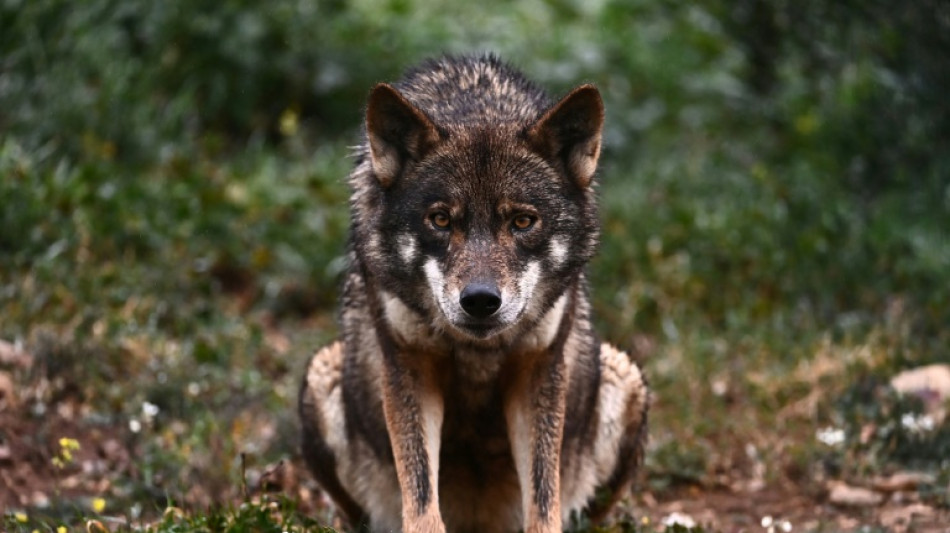
Spain reverses ban on hunting wolves in north / Photo: JORGE GUERRERO - AFP/File

 Manchester United rallies past Roma as PSG dominates in Champions League

 Qatar sees tentative opening for renewed regional diplomacy

 Qatar Tourism joins Pacific Asia Travel Association at London travel market

 Abdul El-Sayed Wins Michigan Senate Seat in Historic Election

 Qatar media bodies discuss support for humanitarian initiatives

 No. 22 UCLA defeats No. 5 Arizona 84-75 despite Kharchenkov's 38 points

 Vessel operator seeks witnesses after Vancouver grounding

 US Air Force deploys F-16 fighters to remote Aleutian base for readiness drill

 Bezos grant helps Seattle nonprofit move thousands of families toward housing

 Shrini Srivastava joins crew of Varanasi-Delhi Vande Bharat Sleeper service

 Nearly Half of Australian Workers Overqualified, Survey Finds

Spanish lawmakers on Thursday voted to end a ban on hunting wolves in the north of the country, three years after its introduction by Prime Minister Pedro Sanchez's minority leftist government.
Spain declared Iberian wolves living north of the Douro river a protected species in 2021, extending an existing hunting ban that was in place in the south over the objections of farmers who argued that it would lead to more attacks on their livestock.
Controlled hunting of the species had been allowed until then in the region which includes Asturias, Cantabria, Castile and Leon, and Galicia where the vast majority of the country's Iberian wolves live.
The reversal of the hunting ban was introduced via an amendment to a law on food waste and approved with the votes of lawmakers from the conservative main opposition Popular Party (PP), far-right Vox, Basque regional party PNV and Catalan separatists JxCat.
The amendment introduced by the PP stipulates that the capture and killing of wolves may be "justified" in the event of a threat to the Spanish "productive system", namely agricultural production.
It removes the wolf from a list of wild species under "special protection" north of the Douro.
Conservation group Ecologists in Action called the reversal of the hunting ban "irresponsible" while animal rights party PACMA described it as "the biggest step backwards in wildlife conservation in years".
Members of the Bern Convention, tasked with the protection of wildlife in Europe and some African countries, in December agreed to lower the wolf's protection status from "strictly protected" to "protected".
Grey wolves were virtually exterminated in Europe 100 years ago but their numbers have rebounded since then to the current population of 20,300, mostly in the Balkans, Nordic countries, Italy and Spain.
G.Teles--PC



