
Nepal capital chokes as wildfires rage / Photo: PRAKASH MATHEMA - AFP

 Manchester United rallies past Roma as PSG dominates in Champions League

 Qatar sees tentative opening for renewed regional diplomacy

 Qatar Tourism joins Pacific Asia Travel Association at London travel market

 Abdul El-Sayed Wins Michigan Senate Seat in Historic Election

 Qatar media bodies discuss support for humanitarian initiatives

 No. 22 UCLA defeats No. 5 Arizona 84-75 despite Kharchenkov's 38 points

 Vessel operator seeks witnesses after Vancouver grounding

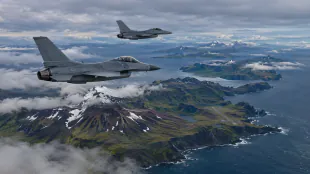 US Air Force deploys F-16 fighters to remote Aleutian base for readiness drill

 Bezos grant helps Seattle nonprofit move thousands of families toward housing

 Shrini Srivastava joins crew of Varanasi-Delhi Vande Bharat Sleeper service

 Nearly Half of Australian Workers Overqualified, Survey Finds

Nepal's capital was blanketed in acrid smog Thursday as wildfires across the country pushed air pollution levels to among the worst in the world.
Experts say that widespread wildfires, fuelled by an exceptionally dry winter and stagnant atmospheric conditions, have caused the thick and throat-burning smog to cover the Kathmandu valley.
Levels of PM2.5 pollutants -- cancer-causing microparticles that enter the bloodstream through the lungs -- registered above 178 micrograms per cubic metre on Thursday, according to Swiss monitoring firm IQAir.
A reading above 15 in a 24-hour period is considered unhealthy by the World Health Organization (WHO), and IQAir ranked Kathmandu the world's most polluted city.
The Himalayan nation sees a spate of wildfires annually, usually beginning in March, but their number and intensity have worsened in recent years, with climate change leading to drier winters.
"The prevailing dry conditions have significantly increased the frequency of forest fires across the country, further worsening air pollution," Khushboo Sharma, an air pollution analyst at the Kathmandu-based International Centre for Integrated Mountain Development(ICIMOD) told AFP.
"This year, precipitation was exceptionally low, with hardly any rainfall, leaving forests dry and more susceptible to fire," she added.
Sharma said that stagnant meteorological conditions are also causing pollution to accumulate over the valley.
On social media, people complained of stinging eyes and itchiness because of the pollution.
Low visibility caused by the smog also disrupted flights at Kathmandu airport, sparking long delays.
"The mountain flights... as well as some other flights have been disturbed because of the pollution," said Rinji Sherpa, the airport's spokesman.
The health ministry issued a notice Wednesday requesting Nepalis to "avoid unnecessary travel" and to wear a mask when outside.
The government has also urged people to avoid construction and burning rubbish.
The Air Quality Life Index, issued by the University of Chicago, estimated that in 2024 air pollution stripped 3.4 years off the life of an average Nepal resident.
A.Magalhes--PC



