
Nepal fights wildfires and pollution amidst drier winter / Photo: Prakash MATHEMA - AFP

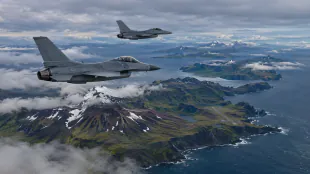
 Greenland parliament approves security agreement with United States

 Qatar envoy meets incoming UN General Assembly president

 Trump Signals Willingness to Work With Democrats After Midterm Defeat

 Galloway accuser could not foresee publishing-sector fallout, lawyer argues

 New York City Center revives In the Heights as a timely community story

 Godzilla Minus Zero shifts focus toward postwar human drama
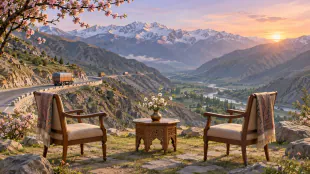 Mehbooba Mufti urges dialogue and renewed Central Asia links for Kashmir

 Seacliff Healthcare Seeks Specialist GP in Thirroul

 US stocks fall before midterm Election Day as technology shares weaken

 BLS Polymers makes strong market debut at ₹248 per share

 Petrol and diesel prices remain broadly steady across major Indian cities

 Reliance shares remain in focus after near-12% surge

 2026 Arizona Midterms: Key Races, Ballot Measures, and Voter Deadlines

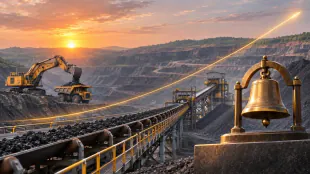 Coal India prepares possible $1 billion Mahanadi Coalfields listing

A dry winter is intensifying wildfires in Nepal, experts said Wednesday, as the capital Kathmandu continued to suffer from hazardous air quality that ranks it among the most polluted cities globally.
Nepal has seen a significant drop in post-monsoon rainfall, with 79.4 percent less precipitation between December and February compared to the average, the Department of Hydrology and Meteorology said Tuesday.
More than 1,800 wildfires have been reported across the country since January, with more than a third of them occurring within the last month.
"The wildfires have increased significantly because of a dry season. There is abundance of dry fuel in the forest, so even a small fire can get uncontrollable," Prakash Malla, a forester at the Department of Forest and Soil Conservation, told AFP.
"It is challenging. The local authorities have limited resources and our terrain is also difficult," he added.
Air quality in the capital Kathmandu has been ranked the worst in the world for over a week, according to monitoring site IQAir, with some flights delayed as thick smoke blankets the city.
Levels of PM2.5 pollutants -- cancer-causing microparticles that enter the bloodstream through the lungs -- registered above 175 micrograms per cubic metre on Wednesday, according to IQAir.
A reading above 15 in a 24-hour period is considered unhealthy by the World Health Organization (WHO), and IQAir ranked Kathmandu the world's most polluted city.
Experts at Kathmandu-based International Centre for Integrated Mountain Development(ICIMOD) in a statement last week attributed the spike to forest fires, especially in the west "where many districts are in moderate to extreme drought".
"Our analysis shows that air quality in Kathmandu was not healthy even before. But the forest fires and a stagnant atmosphere has added on to the existing pollution," ICIMOD air pollution analyst Sagar Adhikari told AFP.
Adhikari said some rain is expected in the next few days and could offer relief.
Nepal's worst fire year was in 2021, with more than 6,500 wildfire incidents.
That year, schools were shut for four days after air quality reached hazardous levels.
Although the number of wildfires decreased in 2022, there has been a steady rise every year since.
The health ministry issued a notice last week requesting Nepalis "avoid unnecessary travel" and to wear a mask when outside.
The government also urged people to avoid construction and burning rubbish.
The Air Quality Life Index, issued by the University of Chicago, estimated in 2024 that air pollution stripped 3.4 years off the life of an average Nepal resident.
J.V.Jacinto--PC



