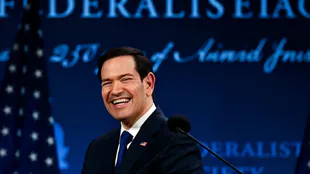
Uncertainty grows over when US budget showdown will end / Photo: Brendan SMIALOWSKI - AFP

 RBI Grants Paytm In-Principle Approval to Revive Wallet Business

 China's Factory Activity Contracts as Export Orders Weaken

 US Retail Sales and Fed Minutes Set Up a Critical Test for Consumers

 MotorTrend’s Top Hybrid Vehicle Picks for 2026

 Asian Markets Slide as AI Concerns Hit Chip Stocks

 Brazil Faces Debt and Inflation Test as Lula Prepares Fourth Term
 Canada Expands Asian Trade Push as US Negotiations Resume

 Jennie Earns Two Grammy Nominations as Major K-pop Agencies Boycott New Asian Pop Category
 Italy Raises 2026 Growth View but Warns Energy Will Keep Inflation High

 UK Economy Grows 0.7% in Third Quarter as Services Lead Expansion

 India's Retail Inflation Reaches 6.09% as Food Prices Accelerate

 China's October Activity Data Reveal a Weak Start to the Fourth Quarter

A partial US government shutdown entered its third day on Monday amid growing uncertainty over Congress finding a path to quickly bring the 2026 budget deadlock to an end.
Despite the apparent impasse, Mike Johnson, speaker of the Republican-controlled House of Representatives, is expressing optimism that an agreement is imminent.
"We'll get all this done by Tuesday; I'm convinced," Johnson said on Fox News Sunday.
He described a vote to be held in the House on Tuesday that would approve a Senate-backed deal to reopen the government as little more than a "formality."
The speaker has a razor-thin majority in the House, however, and cannot afford to lose more than one vote on the Republican side. His margin was reduced even further on Monday with the arrival of a Democrat who won a special election in Texas.
The funding lapse followed a breakdown in negotiations driven by Democratic anger over the killing of two protesters in Minneapolis by federal immigration agents, which derailed talks over new money for the Department of Homeland Security (DHS).
Late Friday, the Senate passed a package clearing five outstanding funding bills to cover most federal agencies through September, along with a two-week stopgap measure to keep DHS operating while lawmakers negotiate immigration enforcement policy.
Several members of the extreme right-wing of the Republican Party are refusing to reopen negotiations on DHS funding, however, and are threatening to vote against the Senate-backed package on Tuesday.
"Democrats are now playing politics," Chip Roy, a Republican lawmaker from Texas, told Fox News Sunday, accusing them of taking DHS funding "hostage."
- 'Good faith' -
Republican defections could force Johnson to rely on Democratic votes to advance the funding bill and end the shutdown.
"I will say that we need good faith on both sides," he said Sunday.
If the House approves the Senate deal, lawmakers would then have just two weeks to negotiate a full-year DHS funding bill.
Both parties acknowledge these talks will be politically fraught, as Democrats are demanding new guardrails on immigration enforcement and conservatives are pushing their own policy priorities.
"We need a robust path toward dramatic reform," Democratic House minority leader Hakeem Jeffries told ABC News on Sunday.
Democrats in the House want changes to the way DHS conducts its immigration sweeps -- with heavily armed, masked and unidentified agents who sometimes detain people without warrants -- before voting on the spending package.
President Donald Trump has publicly endorsed the Senate deal and urged both parties to support it, signaling his desire to avoid a second lengthy shutdown in his second term, following a record 43-day stoppage last summer.
Shutdowns temporarily freeze funding for non-essential federal operations, forcing agencies to halt services, place workers on unpaid leave or require them to work without pay.
F.Santana--PC