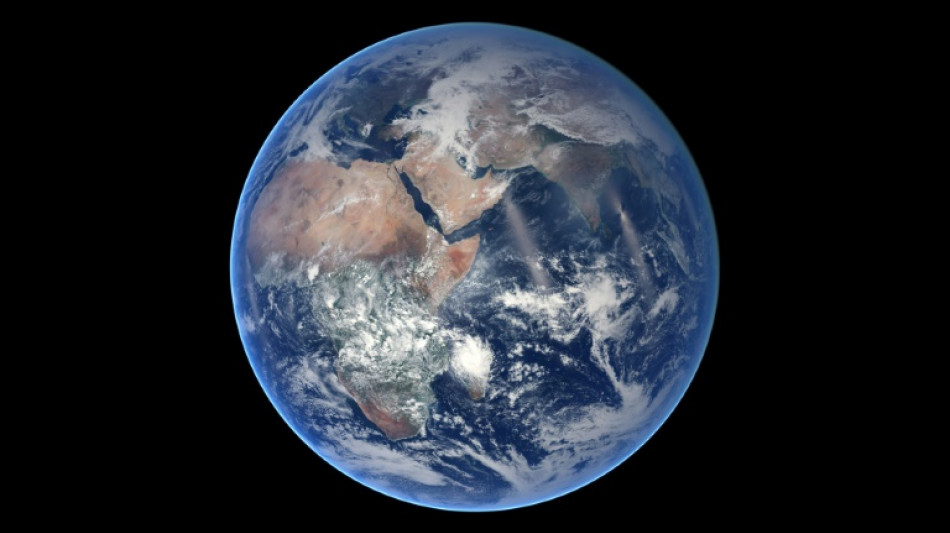
Huge 'blobs' inside Earth are from another planet, study suggests / Photo: HANDOUT - NASA/AFP/File

 ALEX BODI AND AMBASSADOR GUM DOMINIC MATIOK OF THE REPUBLIC OF SOUTH SUDAN MEET IN BERLIN TO DISCUSS THE POSSIBILITY OF AN HONORARY CONSULATE IN BUCHAREST

 Lula, Bolsonaro wrap up campaigns ahead of Brazil's knife-edge vote

 Toulouse edge Castres in Top 14 derby

 Murakami homer propels White Sox to MLB playoff win over Guardians

 Israel targets top Hamas leader in deadly Gaza strike on anniversary

 Houthis say struck oil facility near Riyadh, as Saudis hit Sanaa

 AI needs safety layers like nuclear plants: ex-OpenAI engineer

 MVP Judge will miss Yankees' MLB playoff series against Rays

 New lizard species discovered in Peru

 Fernandes hails Portugal's 'greatest symbol' Ronaldo, calls for unity
 Grandidier-Nkanang double takes Pau to Top 14 summit despite Vannes fightback

 Trainer Scott gets perfect Arc boost with top notch double

 Ex-PM says Putin cannot admit 'mistake' over Ukraine

 Houthis say Saudi Arabia launches dozens of strikes on Yemen capital

 Qatar and Abu Dhabi F1 Grand Prix to go ahead - F1 boss

 South Korea lift gloom with smash-and-grab Games football gold

 Ireland news conference before Israel game cut short amid tensions
 Protests over housing flare in Spain after relief measures rejected

 Zverev thrashes Shang to set up Djokovic quarter-final at China Open

 Turkey football ref chief jailed pending trial for graft
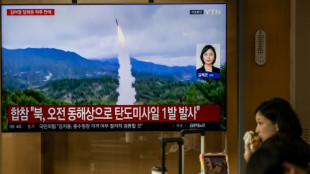 North Korea says test of intermediate-range strategic missile included use of AI

 Rampant Sayers leads Hong Kong to third men's rugby gold in a row

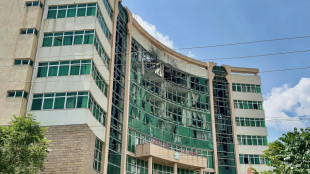 Ethiopia's Tigray rebels abandon regional capital as govt advances

 Bulgaria's Tsar Samuel returns 'home' after 1,000 years

 'Glad it's over': Kim powers to Games gold and military exemption

Scientists proposed a novel idea on Wednesday that could solve two of the world's mysteries at once -- one that passes over our heads every night, and one that sits far below our feet.
The first mystery has puzzled everyone from scientists to inquisitive children for millennia: where did the Moon come from?
The leading theory is that the Moon was created 4.5 billion years ago when a would-be planet the size of Mars smashed into the still-forming Earth.
This epic collision between early Earth and the proto-planet called Theia shot an enormous amount of debris into orbit, which formed what would become the Moon.
Or so the theory goes. Despite decades of effort, scientists have not been able to find any evidence of Theia's existence.
New US-led research, published in the journal Nature, suggests they might have been looking in the wrong direction.
Around 2,900 kilometres (1,800 miles) below Earth's surface, two massive "blobs" have baffled geologists since seismic waves revealed their existence in the 1980s.
These continent-sized clumps of material straddle the bottom of Earth's rocky mantle near its molten core, one below Africa and the other underneath the Pacific Ocean.
Scientists have determined that the blobs are much hotter and more dense that the surrounding rock, but much else about them remains a mystery.
The new research on Wednesday indicates the blobs are "buried relics" of Theia that entered into Earth during their formative collision -- and have been hiding near our planet's heart ever since.
As well as creating the Moon, this collision and the remnants it left behind may have helped Earth become the unique life-hosting planet it is today, the researchers proposed.
- 'Very, very strange' -
Qian Yuan, a geodynamics researcher at the California Institute of Technology and the study's lead author, told AFP it is "very, very strange" that no evidence of the Theia impact has been found.
It was during a class held by a planetary scientist discussing this mystery that Yuan first connected the dots.
"Where is the impactor? My answer is: it's in the Earth," he said.
The planetary scientist holding the class had never heard of the blobs. The research has since required experts in the often separate fields of space and geology to join forces.
Yuan said that when Theia smashed into proto-Earth, it was travelling at more than 10 kilometres (six miles) a second, a speed that allowed some of it to penetrate "very deep into the Earth's lower mantle".
A video developed by the team simulating this process illustrates how clumps of Theia's mantle tens of kilometres wide swirled inside Earth.
As the mostly molten Theia material cooled and solidified, its high level of iron caused it to sink down to the border of Earth's mantle and core, the scientists proposed.
Over the years it accumulated into two separate blobs -- officially called large low-velocity provinces (LLVPs) -- that are now each larger than the Moon, Yuan said.
Testing a theory based so far back in time -- and so deep under Earth -- is incredibly difficult, and Yuan emphasised that their modelling could not be "100 percent" certain.
- 'Why Earth is unique' -
But if true, the implications could be immense.
Earth remains the only planet in the universe known to be capable of supporting life.
The Theia collision, which is believed to be Earth's last major accretion event, significantly changed its composition in just 24 hours, Yuan said.
"My feeling is that this initial condition is why Earth is unique -- why it's different to other rocky planets," he said.
Previous research has suggested that Theia could have brought water, the key ingredient of life, to Earth.
The blobs have been observed sending up "mantle plumes" -- columns of magma -- towards the Earth's surface, and have also been linked to the evolution of supercontinents.
Theia "left something in the Earth -- and that played a role in Earth's subsequent 4.5 billion years of evolution," Yuan said.
Christian Schroeder, an expert in both Earth science and planetary exploration at Scotland's University of Stirling, told AFP the theory "fits several strands of evidence".
"It is a very significant and exciting finding," said Schroeder, who was not involved in the research.
He emphasised that the mystery of the Moon's formation had not been solved.
But the research gives more weight to the Theia impact theory -- and provides "a credible explanation for these anomalies at the core-mantle boundary at the same time," he said.
The remnants of Theia potentially preserved underneath us "may be responsible for important processes on Earth ongoing to this day," Schroeder added.
A.Silveira--PC



