
To the Moon and back: modern lunar exploration / Photo: Philip FONG - AFP/File

 Latvian partial election results suggest pro-European choice

 In Egypt's Sinai, Gazan builds school for children displaced by war

 Trump tariffs a mixed bag for US auto industry

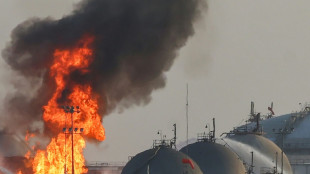 Yemen government forces say struck Houthi targets

 Music links past, present for Pedro Pascal's cellist in 'Behemoth!'

 ALEX BODI ȘI AMBASADORUL REPUBLICII SUDANUL DE SUD, GUM DOMINIC MATIOK, DISCUTĂ LA BERLIN DESPRE POSIBILITATEA ÎNFIINȚĂRII UNUI CONSULAT ONORIFIC LA BUCUREȘTI

 Dodgers step up World Series three-peat bid with 5-3 win over Braves

 Spain break down Czechs as England outclass Croatia in Nations League

 Yamal on target as Spain hold off Czech Republic

 Latvian exit polls suggest pro-European choice

 Lula, Bolsonaro wrap up campaigns ahead of knife-edge election
 Tuchel hails 'complete' England after Croatia demolition

 Fury to invite Trump to lead ring walk before Joshua showdown

 Fashion industry in 'precarious moment', says Vivienne Westwood supremo

 Seventh heaven for England in Nations League rout of Croatia

 Storms, flooding cause chaos on Greek holiday island of Crete

 #IAmJaneDoe: online support campaign in US university rape case

 Brazil shine on Selecao's first visit to India

 Zverev sets up Djokovic quarter-final at China Open, Rybakina out

 Happier at home, Bordeaux hammer Lyon in Top 14

 Lula, Bolsonaro in final push for votes ahead of knife-edge election

 Boisterous fashion week barnstorms 'sleepy' Nigerian capital

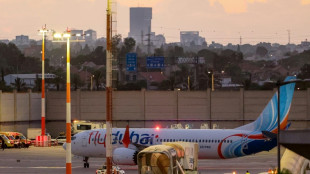 UAE investigators say flydubai co-pilot was planning 'terrorist act'

 Rahul smacks century in India v Windies ODI

 Daryz seeks to join exclusive club of dual Arc winners

Japan, whose unmanned "sniper" probe will attempt a lunar landing on Saturday, is one of many countries and private companies launching new missions to the Moon.
It is a feat so far only achieved by four nations -- the United States, the Soviet Union, China and most recently India -- with spacecraft often losing communication or crash-landing.
Modern lunar exploration programmes include plans to put humans on the Moon for the first time since 1972 and eventually establish bases there.
Here is a rundown of the latest moonshots:
- United States -
The first country to land on the Moon wants to build a sustained presence there as a pitstop for missions to Mars.
But it has faced two setbacks this month, as NASA postponed plans for crewed lunar missions and a private lander had to turn back after leaking fuel.
Under the US space agency's Artemis programme, astronauts had been due to fly around the Moon this year but the mission has been pushed back to 2025 to allow for extra safety checks.
A third Artemis voyage -- to put the first woman and first person of colour on lunar soil -- is now scheduled for 2026 instead of 2025.
Even that may be optimistic, because the Artemis 3 lander, a modified version of SpaceX's next-gen Starship rocket, has exploded in two test flights.
NASA says commercial tie-ups give it "more shots on goal" although its Peregrine lunar lander, made by US company Astrobotic, failed when it lost fuel after take-off.
The next attempt, by Texas-based Intuitive Machines, launches in February.
- India -
"India is on the Moon!" the country's space agency chair announced to cheers at mission control in August after Chandrayaan-3 became the first craft to land near the celestial body's south pole.
The unmanned mission orbited Earth several times to build up speed for its journey, resulting in a historic triumph for India's ambitious, cut-price space programme.
In 2014, India became the first Asian nation to orbit a probe around Mars, and Chandrayaan-3 followed a successful launch into lunar orbit in 2008 and a failed Moon landing in 2019.
The Indian Space Research Organisation (ISRO) has a dozen missions planned for 2024, including preparation for a three-day trip into Earth's orbit -- its first crewed space flight.
- Russia -
The Luna-25 mission in August was meant to mark Russia's return to independent lunar exploration, nearly half a century after the Soviet Union last landed on the Moon.
But the lander crashed on the rocky lunar surface, where it was meant to collect samples and analyse soil for one year.
The failure dealt a blow to Moscow's hopes of building on the legacy of the Soviet-era Luna missions, as financial troubles and corruption scandals plague its space programme.
President Vladimir Putin has also been working to strengthen space cooperation with China after ties with the West broke down following Russia's 2022 invasion of Ukraine.
- China -
The world's second-largest economy has pumped billions of dollars into its military-run space programme as China chases its "space dream" under President Xi Jinping.
A decade since the Chang'e-3 became the first Chinese spacecraft to land on the Moon, the country is now pursuing plans to send a crewed mission by 2030 and build a base there.
In 2019, the unmanned Chang'e-4 landed on the far side of the Moon, and a year later, Chang'e-5 brought the first lunar samples back to Earth in more than 40 years.
In October, the country sent a fresh team to its Tiangong space station in the latest crewed mission for the fast-growing space programme.
- Japan -
Japanese company ispace attempted a soft lunar landing in April last year but crashed, becoming the third private entity to have failed in the endeavour.
Space agency JAXA has suffered a run of bad luck, losing communication with its Omotenashi lunar probe carried on Artemis 1 in 2022.
It has also seen failures after lift-off of the next-generation H3 launch rocket and the normally reliable solid-fuel Epsilon rocket.
So hopes are high for a successful touchdown on Saturday of its Smart Lander for Investigating Moon (SLIM) craft, nicknamed the "Moon Sniper" for its precision landing capabilities.
The pressure is on, however, as countries from South Korea to the United Arab Emirates ramp up efforts to be the next to make lunar history.
burs-kaf/sco/mlm
A.Santos--PC



