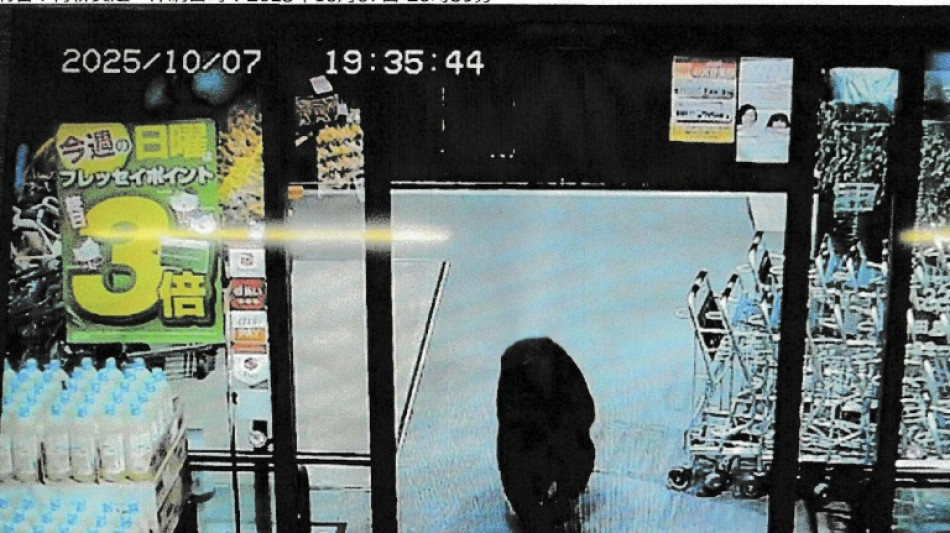
Fatal bear attacks in Japan hit record number / Photo: STR - GUNMA PREFECTURAL POLICE VIA JIJI PRESS/AFP/File

 Equitas Small Finance Bank rebounds after naming interim chief executive

 Titan quarterly profit seen rising as jewellery business drives growth

 Kuwait finance minister holds economic cooperation talks at COMCEC

 Abdul El-Sayed declares victory in Michigan Senate contest

 Democrats capture US Congress in sweeping midterm victory

 Manchester United rallies past Roma as PSG dominates in Champions League

 Qatar sees tentative opening for renewed regional diplomacy

 Qatar Tourism joins Pacific Asia Travel Association at London travel market

 Abdul El-Sayed Wins Michigan Senate Seat in Historic Election

 Qatar media bodies discuss support for humanitarian initiatives

Bears have killed a record number of people in Japan this year, the environment ministry said on Thursday just as another possible victim was reported missing.
Bears hungry because of shortages of food such as acorns -- which has been blamed on climate change -- are encroaching more into towns where the human population is ageing and dwindling.
Experts say that warmer weather is also affecting the hibernation patterns of the animals, which in the case of brown bears can weigh half a tonne (1,100 pounds) and outrun a human.
The new total of seven deaths in the current fiscal year "is the largest toll since 2006, when statistics started", an environment ministry official told AFP.
It surpassed the previous high of five human fatalities recorded in the 2023-24 fiscal year, the official told AFP on condition of anonymity.
More than 100 other people have been left with injuries including bites and deep gashes from the bears' sharp claws.
The record was reached following confirmation that a man in his 70s found dead on October 8 in the northern Iwate region had been killed by a bear.
Japanese broadcaster TV Iwate said the man's head and torso had been separated.
The body of another man in his 70s, also in Iwate, was found just two days later in a forest where he had been picking mushrooms.
A few days earlier, the body of a 78-year-old man with multiple claw marks was recovered in the central prefecture of Nagano.
However, the cause of death was yet to be confirmed in either of those last two cases.
- Bloodstain -
A worker at a hot spring resort in Kitakami, also in Iwate, was also reported missing on Thursday. Local media said that a search team had found what appeared to be human blood.
Five more people were reported injured on Thursday in incidents in Akita and Fukushima prefectures, Fuji Television network reported.
A 1.4-metre (4.5-foot) adult bear entered a supermarket in the Gunma north of Tokyo last week, leaving a man in his 70s and another in his 60s with light injuries.
The store is close to mountainous areas but has never had bears come near before, Hiroshi Horikawa, an executive at the grocery store chain, told AFP.
The animal damaged a fish compartment and "in the fruits section, it knocked over a pile of avocados and trod on them", he said.
The store's manager told local media that around 30 to 40 customers were inside at the time, and that the bear became agitated as it struggled to find the exit.
A Spanish tourist was also attacked by a bear this month at a bus stop in the scenic village of Shirakawa-go in central Japan.
Japan has two types of bear: Asian black bears -- also known as moon bears -- and the bigger brown bears that live on the main northern island of Hokkaido.
Thousands of the animals are shot every year, although Japan's ageing human population means that the number of hunters is declining.
T.Batista--PC