Lights go out on Hungary stadiums, theatres as energy crisis bites / Photo: ATTILA KISBENEDEK - AFP

 ALEX BODI AND AMBASSADOR GUM DOMINIC MATIOK OF THE REPUBLIC OF SOUTH SUDAN MEET IN BERLIN TO DISCUSS THE POSSIBILITY OF AN HONORARY CONSULATE IN BUCHAREST

 Lula, Bolsonaro wrap up campaigns ahead of Brazil's knife-edge vote

 Toulouse edge Castres in Top 14 derby

 Murakami homer propels White Sox to MLB playoff win over Guardians

 Israel targets top Hamas leader in deadly Gaza strike on anniversary
 Houthis say struck oil facility near Riyadh, as Saudis hit Sanaa

 AI needs safety layers like nuclear plants: ex-OpenAI engineer

 MVP Judge will miss Yankees' MLB playoff series against Rays

 New lizard species discovered in Peru

 Fernandes hails Portugal's 'greatest symbol' Ronaldo, calls for unity
 Grandidier-Nkanang double takes Pau to Top 14 summit despite Vannes fightback
 Trainer Scott gets perfect Arc boost with top notch double

 Ex-PM says Putin cannot admit 'mistake' over Ukraine

 Houthis say Saudi Arabia launches dozens of strikes on Yemen capital

 Qatar and Abu Dhabi F1 Grand Prix to go ahead - F1 boss

 South Korea lift gloom with smash-and-grab Games football gold

 Ireland news conference before Israel game cut short amid tensions
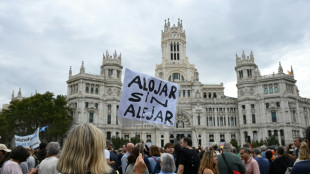 Protests over housing flare in Spain after relief measures rejected

 Zverev thrashes Shang to set up Djokovic quarter-final at China Open

 Turkey football ref chief jailed pending trial for graft
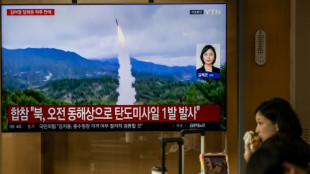 North Korea says test of intermediate-range strategic missile included use of AI

 Rampant Sayers leads Hong Kong to third men's rugby gold in a row

 Ethiopia's Tigray rebels abandon regional capital as govt advances

 Bulgaria's Tsar Samuel returns 'home' after 1,000 years

 'Glad it's over': Kim powers to Games gold and military exemption

Rocketing energy bills are forcing Hungary to shutter libraries, theatres, swimming pools and even its new football stadiums for winter.
The state-of-the-art grounds -- symbols of right-wing nationalist Prime Minister Viktor Orban's 12 years in power -- are among a long list of buildings no longer able to cope with rising energy prices in the central European country.
Despite being one of the country's richest cities and being run by Orban's own party, Szekesfehervar is one of many closing its museums, libraries and theatres.
Its new 14,000-capacity city-run stadium also pulled down its shutters this month to save costs, said mayor Andras Cser-Palkovics.
"Community spaces are what make a city. No one was happy about the measures but they accepted that they are needed," Cser-Palkovics, a member of Orban's ruling Fidesz party, told AFP in Szekesfehervar's City Hall.
- 'Won't wait for miracles' -
Like other cities, Szekesfehervar, 60 kilometres (37 miles) southwest of the capital Budapest, has tried to mitigate the effects of these closures.
The next Hungarian league games are in late January, so no football matches have had to be called off because of the stadium's closure.
Local side Fehervar FC, which usually trains at the stadium during the winter, can use other pitches in the city.
"Fehervar FC's professional work is not particularly affected by the drastic decision to save energy," the club said.
Cser-Palkovics said the plan is for the stadium, only built in 2018, to reopen in mid-January, adding that he has asked the league to reschedule evening games in the New Year to save on pitch heating and floodlight costs.
"We should not wait for miracles, we can help ourselves by our own measures," he said.
Elsewhere in the city, the Vorosmarty Theatre will close after performing its Christmas and New Year programme and will reopen in March when the spring season kicks off, said its head Janos Szikora.
"We won't sit around desperately thinking, 'Oh my God what will happen,'" Szikora told AFP, adding that while the theatre is closed actors will find other spaces to rehearse.
- Blaming Brussels -
The energy crisis -- a ripple effect from the Ukraine war -- has piled pressure on nationalist premier Orban, who has made low household utility bills a core policy over the last decade.
Inflation in Hungary reached 21.6 percent in October, its highest level since 1996, and the third highest in the EU, according to Eurostat.
Government-mandated price caps on basic foodstuffs and fuel aimed at stemming price rises have led to shortages in some shops and petrol stations.
With recession looming -- GDP contracted by 0.4 percent in the third quarter -- EU funds totalling more than 14 billion euros ($14.4 billion) have been withheld over corruption and rule-of-law concerns.
"Rising energy bills and even more so inflation are affecting everyone -- the question is who Hungarians will blame for these economic hardships," said Andrea Virag, strategy director of the Budapest-based Republikon think tank.
A government billboard campaign accuses the EU, saying "Brussels sanctions are ruining us", while a government "national consultation" survey sent to households poses leading questions also critical of the sanctions.
"It is clear that the tactic of the Hungarian government and Orban is to put all the blame on Brussels," Virag told AFP. "There is some research that suggests that a huge amount of people believe Fidesz's narrative."
It remains to be seen how many businesses will be forced to close for good in the months to come.
While industrial Szekesfehervar is relatively wealthy, other municipalities particularly in poorer eastern regions are threatened by bankruptcy unless they get state support, according to mayor Cser-Palkovics.
Geza Deli, a pensioner walking on Szekesfehervar's main street, told AFP he agreed with City Hall's strategy of reducing services deemed non-essential.
"Obviously there are some basic public services which need support -- primarily education and healthcare. It is more important that a doctor can take care of me than I can go to a football match," the 72-year-old said.
A.Magalhes--PC