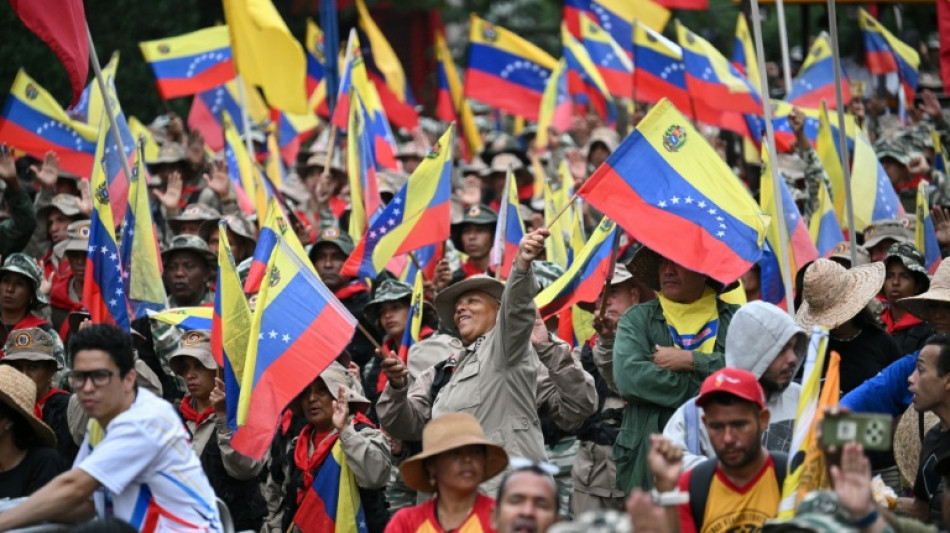
On Venezuela, how far will Trump go? / Photo: Federico PARRA - AFP

 Xi arrives in US to personal Trump welcome
 Morocco elects new parliament amid social frustration, youth discontent
 Scheffler and Burns to face Im and Lee in Presidents Cup opener
 Crushing wins for Lyon and Barca in women's Champions League
 Rio breaks record for rainiest September amid powerful El Nino
 At UN, tech chiefs urge caution in AI development
 Russian strikes kill seven in Ukraine, Zelensky vows winter campaign
 Venezuelan shot by ICE needs urgent medical care, mother tells AFP
 Zelensky says Putin using fighters from 47 countries in Ukraine war
 Klopp calls on Germany to 'rise above ourselves' as new era begins
 Russian strikes kill seven in Ukraine as Russia vows no 'pause' to war

 ArcPoint Expands Globally with Institutional Intelligence Platform for Modern Investors
 Ronaldo focussing on 'present' ahead of Wales test
 Outgoing UN chief makes final climate push at New York summit
 Grief and pain flow at hearing for Canadian suicide poison vendor
 Ireland boss Hallgrimsson says timing of Israel remarks 'not clever'
 Weinstein resentenced to 15 years in prison for 2006 sex assault
 Fendi brings disco bling, Italian style, to Milan Fashion Week
 French court confirms rape trial for PSG and Morocco star Hakimi
 President tells Trump that Iran will never 'bend at the knee'
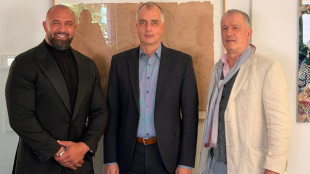 أليكس بودي والبروفيسور الدكتور شتيفان هاوبت يتفقان على التعاون من أجل مجموعة فنية أسطورية في رومانيا
 U2 at 50: Irish rockers reveal anniversary album
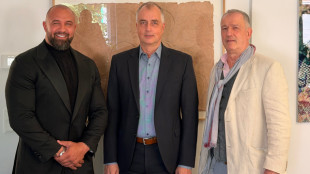
 Алекс Боді та проф. д-р Стефан Гаупт домовилися про співпрацю щодо легендарної колекції мистецтва в Румунії
 Alex Bodi și prof. dr. Stefan Haupt încheie un acord de cooperare pentru o colecție de artă legendară în România
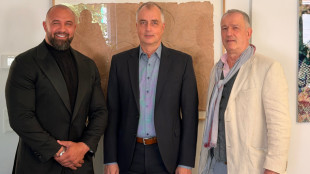 Alex Bodi and Prof. Dr Stefan Haupt agree to collaborate on a legendary art collection in Romania
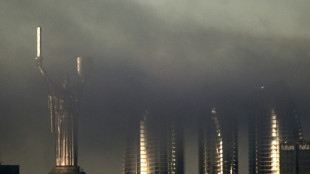
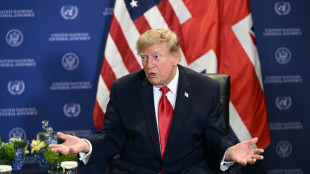
President Donald Trump has deployed thousands of US troops to the Caribbean and warned of strikes on Venezuelan soil.
On Wednesday, Trump announced the seizure of an oil tanker in enforcement of unilateral US sanctions.
How far could Trump go, and what would be the result?
- What is the movitation? -
Venezuelan President Nicolas Maduro, a leftist nemesis of the United States, successfully resisted an attempt during Trump's first term to oust him through sanctions and diplomatic pressure.
Days before Trump returned to office, Maduro was sworn in to a third six-year term despite international observers finding wide irregularities in last year's election.
Trump has criticized democracy promotion as a goal and pursued a transactional approach to diplomacy, which he initially pursued with Maduro as well.
But Secretary of State Marco Rubio, seeking to bring down the communist government in his ancestral Cuba -- which benefits from Venezuelan oil -- quickly led to a shift toward a more hawkish policy that includes unsubtle threats to remove Maduro.
"His days are numbered," Trump said of Maduro in a recent interview with Politico, adding that he would not "rule in or out" whether he would order a ground invasion.
- A light military option? -
Many observers believe Trump has politically forced himself to take some sort of action, as weeks have gone by since he threatened strikes.
The Trump administration may decide "we'll look really foolish and we'll lose a lot of credibility if we just order the fleet to sail away," said Phil Gunson, a Venezuela-based expert for the International Crisis Group.
Trump could also order a light military campaign and declare mission accomplished.
In such a scenario, the United States could strike illegal drug production -- officially the main US grievance with Venezuela, although the country has few drug labs -- or remote guerrilla camps, whose fighters likely have already dispersed, Gunson said.
- A heavier option? -
Few think Trump has the appetite for a full-scale military invasion of Venezuela, a country of 31 million about the size of Texas.
A takeover of the country, whose economy has been crumbling for years, would be a daunting task with little support among the US population.
But higher-risk strategies could include directly striking government or military sites.
The Venezuelan military conceivably could try to shoot down missiles or planes, but would be badly outmatched.
"Maduro doesn't want to escalate because if he provokes them into doing something full scale, he knows that his military wouldn't last more than a day or two," Gunson said.
Will Freeman, a fellow on Latin America at the Council on Foreign Relations, said Trump more likely wants Maduro to think the United States is willing to take drastic action -- including killing him.
The fact that Trump has publicly said the United States is taking covert action inside Venezuela is "the clearest signal of any that this is a psyop, and the whole point is to generate anxiety and fear," Freeman said.
- Could Maduro fall? -
Maduro is in a weaker position than during Trump's first term, but still counts on the military.
"He may have the support of somewhere between 20 and 30 percent of the electorate, which is not a negligible amount of people, but it's clearly not enough to govern the country, especially when you just stole an election," Gunson said.
"His continued hold on power is entirely dependent on maintaining the loyalty of the armed forces."
Freeman said that even if the United States strikes, "I'm predicting that Maduro remains."
Trump could instead seal a deal to claim success, such as on drugs or migration, Freeman said.
Venezuela's largest neighbors, Colombia and Brazil, have leftist leaders critical of Trump's interventionism.
But Trump has also found support, from tiny nearby Trinidad and Tobago to right-led countries across the region such as Argentina and Peru.
"If the US did succeed in toppling Maduro there would be a lot of angry communiques about the use of force in the Americas, but behind the scenes a lot of people breathing a sigh of relief if it actually worked," Gunson said.
"My doubt, of course, is whether it would really work."
P.L.Madureira--PC