India climbs green-transition ranking after first emissions decline in 25 years

 Freshways milk-price cut deepens pressure on UK dairy farms
 Labour and National remain virtually tied as New Zealand vote count advances

 The Good Daughter adapts Karin Slaughter thriller with Rose Byrne and Meghann Fahy

 Heavy-lift drone evacuates wounded Ukrainian soldier from frontline kill zone

 Morrison says West Brom recovered after pressure from successive derby losses

 Britain considers 2027 state visit for Ukraine’s Zelensky

 China and Gabon Elevate Ties to 'Shared Future' Amid State Visit

 World Golf Awards 2026 to be Hosted at Egypt’s Madinaty Golf Club

 12 Billion Gallons of Raw Sewage Discharged into Chicago River Despite Deep Tunnel Infrastructure

 Edmund Richardson Wins Baillie Gifford Prize for 'Alexander' Biography
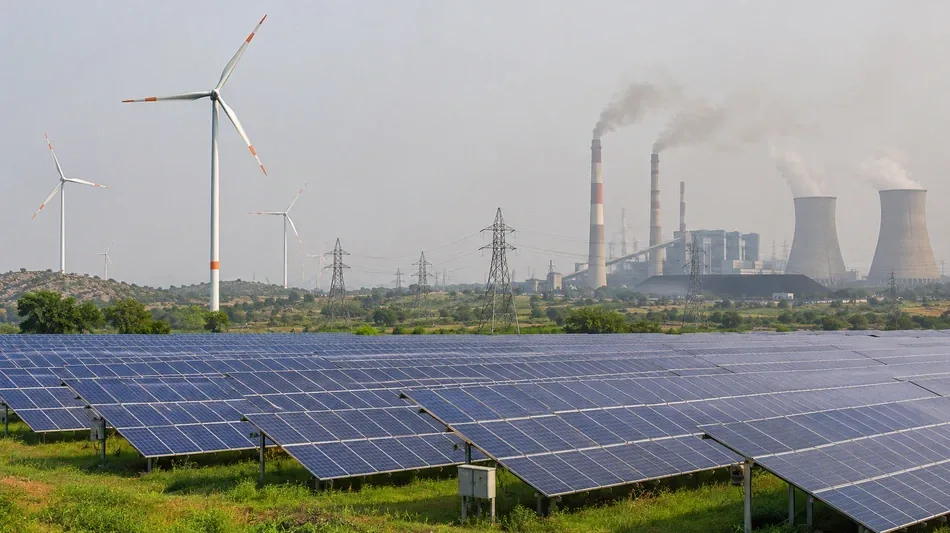
India rose five places to 45th in the Allianz Green Transition Tracker after greenhouse-gas emissions fell 0.2% in 2025 despite economic growth of about 7.6%.
Emissions declined to 4,508 million tonnes of carbon-dioxide equivalent, the first reduction outside an economic contraction in 25 years. India’s progress score rose 4.5 points to 14.6, compared with a two-point global average gain across the 65 economies assessed.
Low-carbon electricity increased from 22.4% to 26.6% of generation. Solar output rose 37%, wind 28% and hydropower 14%, while coal-fired generation fell 2.9%, helping cut power-sector emissions by about 3%.
The report warned that coal generation rebounded in 2026 and that per-capita carbon emissions continued to rise. Fossil-fuel subsidies reached $67.5 billion, more than twice the 2015 level, underlining the challenge of sustaining the decline as electricity demand expands.
F.Moura--PC