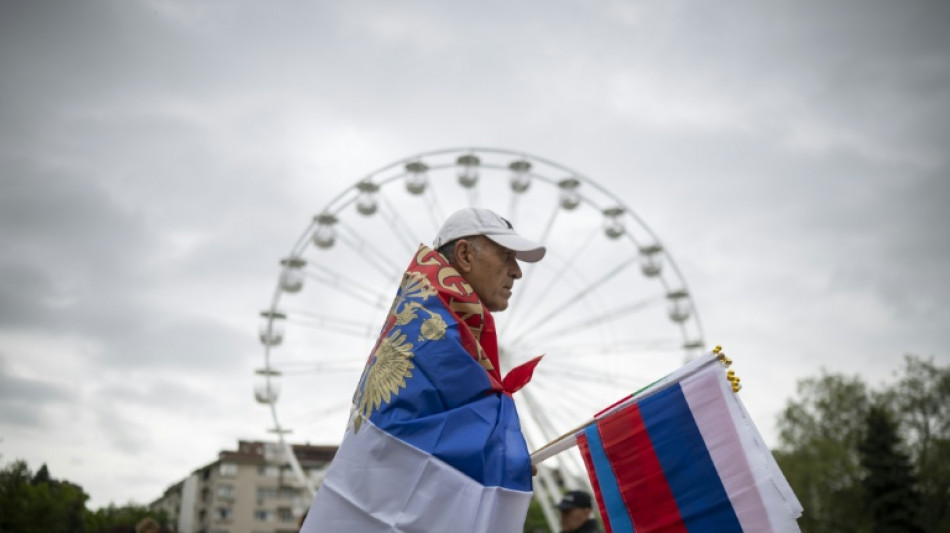
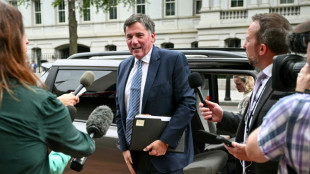
Bulgaria's pro-Russians seek place after Radev win / Photo: Nikolay DOYCHINOV - AFP

 World No.2 Rybakina retires from Cincinnati clash with Swiatek
 'I heard you missed me': Melania Trump jokes about month out of spotlight
 Amazon Prime Video to invest $2 bn in Latin America productions
 Panama Canal to reduce shipping over El Nino-fueled drought
 Maradona trial on hold over possible medical evidence mix-up
 'Green dilemma': China's solar boom hurt birds, says study
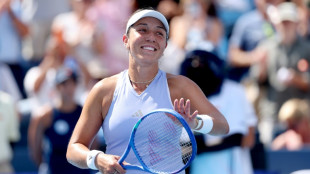 Pegula hangs on to dispatch Anisimova, reach Cincinnati semi-finals
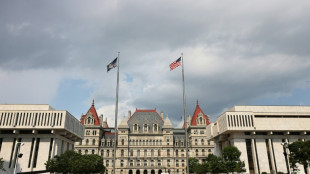 US charges woman with IS-inspired plot to blow up New York State Capitol
 What a record-breaking El Nino could mean for the world
 Duplantis edges Karalis to win Lausanne Diamond League pole vault
 Alcaraz to return for US Open title defence

 China's rapid solar expansion hurt bird diversity: study
 President Paul Biya back in Cameroon after 73 days away
 Newcastle boss Jaissle unfazed by lack of respect
 US Open purse to top $100 mn as Grand Slams form player council
 Hull aim to silence critics after unexpected promotion to Premier League
 Pakistan hit back against England after Cox and Root fifties
 Walmart reports mixed results as gas prices drag on US sales growth
 Wang downs Sindhu to break Indian hearts at badminton worlds
 As Europe's rivers recede, shippers scramble to limit damage
 Alonso won't confirm Fernandez will remain at Chelsea after Man City link
 Milky Way's fastest star discovered spinning around black hole
 Kanye West planned concerts trigger frenzy in Russia
 Hungary music festival basks in post-Orban freedom
 Vatican says 'serious concerns' over Israel-Lebanon deal implementation
Bulgaria's Rumen Radev won April's election with backing from traditional pro-Russian voters, but festivities commemorating the end of World War II showed he has not charmed all in the EU member historically close to Russia.
Laying flowers at a Sofia monument to Bulgarian soldiers on May 9, the day after his inauguration, Radev faced jeers from a pro-Russian gathering honouring Red Army soldiers killed in the fight against the Nazis.
"I want to thank them for the victory over fascism and ask them to free us again, from fascism, from the EU and from NATO," said 50-year-old Velitchka Georgieva.
In the run-up to the April 19 snap vote, some media and analysts depicted Radev as pro-Russian, with him saying he was ready to resume dialogue with Moscow and opposed to sending weapons to Ukraine battling a Russian invasion since 2022.
But other experts said Radev was above all a pragmatist who capitalised on voters' attachment to Russia, which more than 20 percent of the electorate have expressed.
"He exploited divisions in society and, through his silence, managed to tell everyone what they wanted to hear," said political analyst Ildiko Otova, an expert on populism and the far right.
Bulgaria joined NATO in 2004, the European Union in 2007 and the eurozone this year, but the country has historic ties with Moscow, besides its Slavic roots, Orthodox Christian faith and the Cyrillic alphabet.
Radev clinched an absolute majority in parliament, the first for any Bulgarian party in three decades.
The far-right Vazrazhdane party, which last year signed an agreement with Russian President Vladimir Putin's party United Russia, only just managed to enter parliament.
While Radev, who won elections on a promise of fighting graft, has hailed the benefits Bulgaria has reaped from EU membership, he has also called for dialogue with Russia.
"Bulgaria is in a unique position, because we are the only EU member state that is both Slavic and Eastern Orthodox. That should be used," Radev, a former jet pilot and president for nine years, said before the elections.
"And we really can be a very important link in this whole process, which I am sure will sooner or later begin to restore relations with Russia."
– 'Emotional attachment' –
On May 9, about a hundred people marched through the streets of Sofia to celebrate the Soviet role in the victory of 1945, carrying red carnations, Soviet flags and even portraits of Vladimir Putin.
Some Bulgarians feel friendlier towards Russia than those in other countries of the former Eastern bloc because of a sense of "closeness rooted in the similar languages and shared religion", Dimitar Bechev, a researcher at the Carnegie Europe think tank, told AFP.
The closeness also has historic origins as Russia helped free the country from five centuries of Ottoman rule in 1878.
The Moscow-steered communist regime of 1946-1989 exploited the liberation for its propaganda as it turned Bulgaria into Moscow's most loyal satellite.
Bechev said some Bulgarians also feel resentment towards the West which "translates into a view of Russia as an alternative but even more importantly Bulgaria's 'Super Ego'".
These views stoke the ongoing debate on the geopolitical focus of the corruption-hit Balkan country of 6.5 million people, which is the EU's poorest member.
But Otova said there were also more intimate reasons for Sofia's closeness to Moscow: "There is a deep emotional attachment with many mixed marriages, and Russians remain the country's largest immigrant community."
- 'Brotherly nation' -
For decades, pro-Russian gatherings were held at the imposing Monument to the Soviet Army in the heart of Sofia.
In 2023, a bronze statue at its top was dismantled following years of rifts between pro-Russians and pro-Europeans, and the site has since been surrounded by a rusty metal fence covered in graffiti.
On May 9, protesters hung a large banner there depicting the monument intact, with some laying flowers at the site.
"It's simply a question of respect for the Russian brotherly nation, especially at the cultural and economic level," 77-year-old pensioner Anton Antonov told AFP.
He said closer ties with Moscow were "necessary", but he voiced doubts that the new Bulgarian government will change the country's foreign policy focus as "the majority of Bulgarians have chosen the European Union".
E.Borba--PC